Inspiration through material
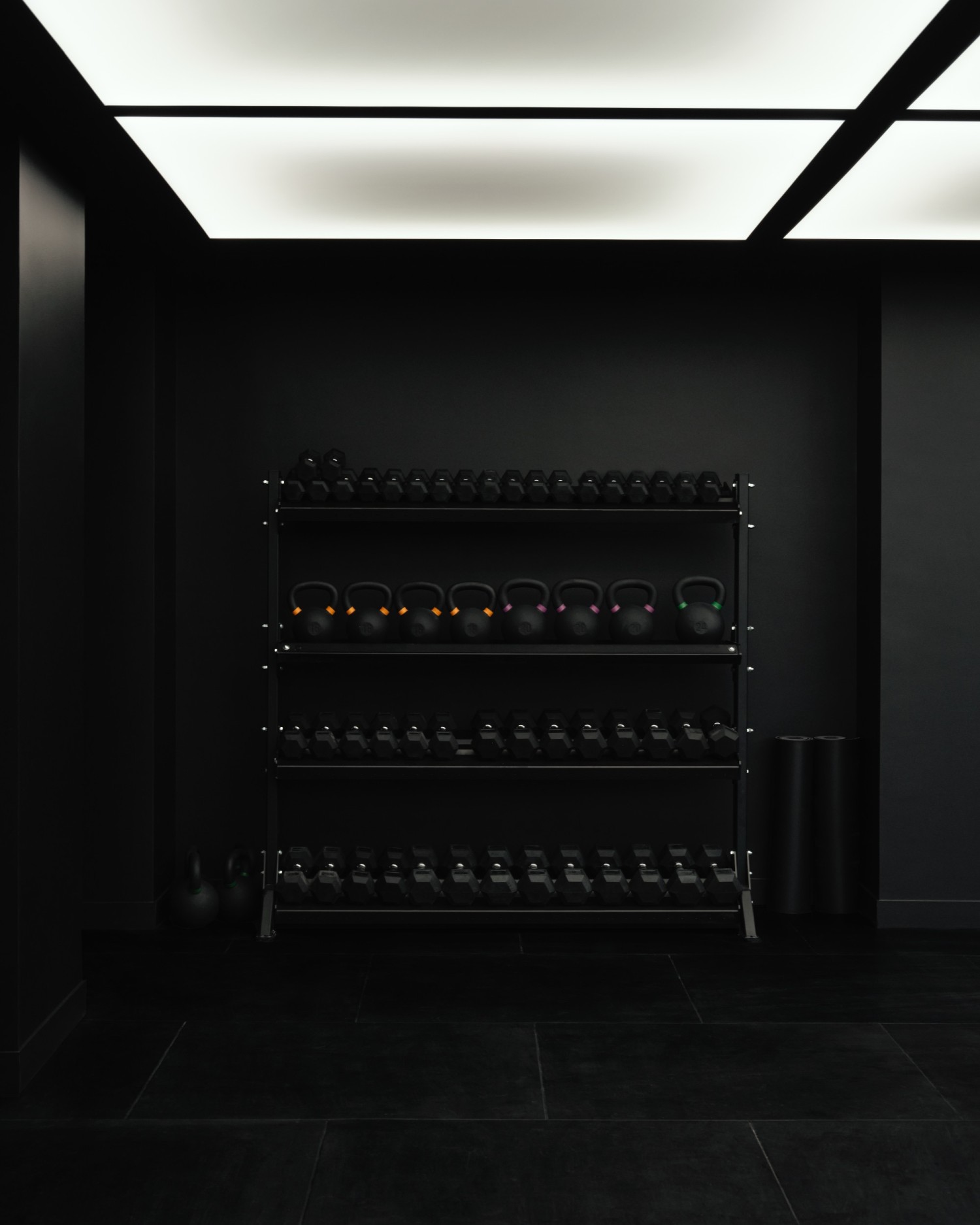
BOLD Sport Studio, Rudy Guénaire, Paris, France, 2026 © Robin Le Febvre
After designing a Nespresso café and the Suite 2046 for Maison&Objet, Rudy Guénaire turns his attention to BOLD Sport Studio, a new kind of fitness space where sound, light and movement set the rhythm of the architecture in unison.
Fourteen years ago, fresh out of HEC, Rudy Guénaire and his business partner Graffi Rathamohan took a gamble on creating a burger restaurant brand. The concept was polished: quality ingredients, carefully considered interiors and distinctive takeaway packaging. The formula struck a chord — a universal yet gourmet dish served within an immersive environment. From Paris to Grenoble, each new location offered its own interpretation of the codes of the American diner. Guénaire surrounded himself with architects, from the CUT agency to Bernard Dubois, developed a taste for site meetings, then gradually became involved in designing the spaces himself, eventually creating the furniture and structuring his vision around his own architecture practice, NightFlight.
Today, his signature — soft, milky cream tones, the pinkish hues of American cherry wood, and a retrofuturist aesthetic somewhere between Streamline Moderne and spaceship interiors — extends well beyond PNY restaurants. “I like the idea of the capsule or the cabin: you retain the comfort of a small space of your own, but at the same time there is movement; you don’t feel enclosed.” It is a way of conceiving space as a journey, even when it leads nowhere. Approached by Nespresso to design its Paris coffee shop, and by Maison&Objet to envision a hotel suite set in 2046, the self-taught architect brings his sense of hospitality to each project.
His latest field of exploration? The gym. Working with entrepreneur Marion Prieur and sports coach Tea Jusic, he has shaped the space around the experience of exercise itself. A keen trail runner, triathlete and Ironman competitor, Guénaire draws on the sensations accumulated through his own adventures. The most memorable remains the Continental Divide Trail (CDT), a solo crossing of the United States on foot. Running from the Mexican to the Canadian border, the trail follows the Continental Divide through the Rocky Mountains. “I wanted to do something difficult, something connected to nature. I slept in the desert without a tent; it was extraordinary, but there was also this sense of vertigo. And when your heart starts racing, especially out in nature, things become almost cosmic: you get this rush of endorphins and enter another dimension. Americans say ‘when I’m out there’ to describe that state. I think it captures it perfectly: when you exercise, you’re ‘somewhere else’. It’s a kind of spiritual shower — you stop thinking about anything else, and it does you a world of good.”
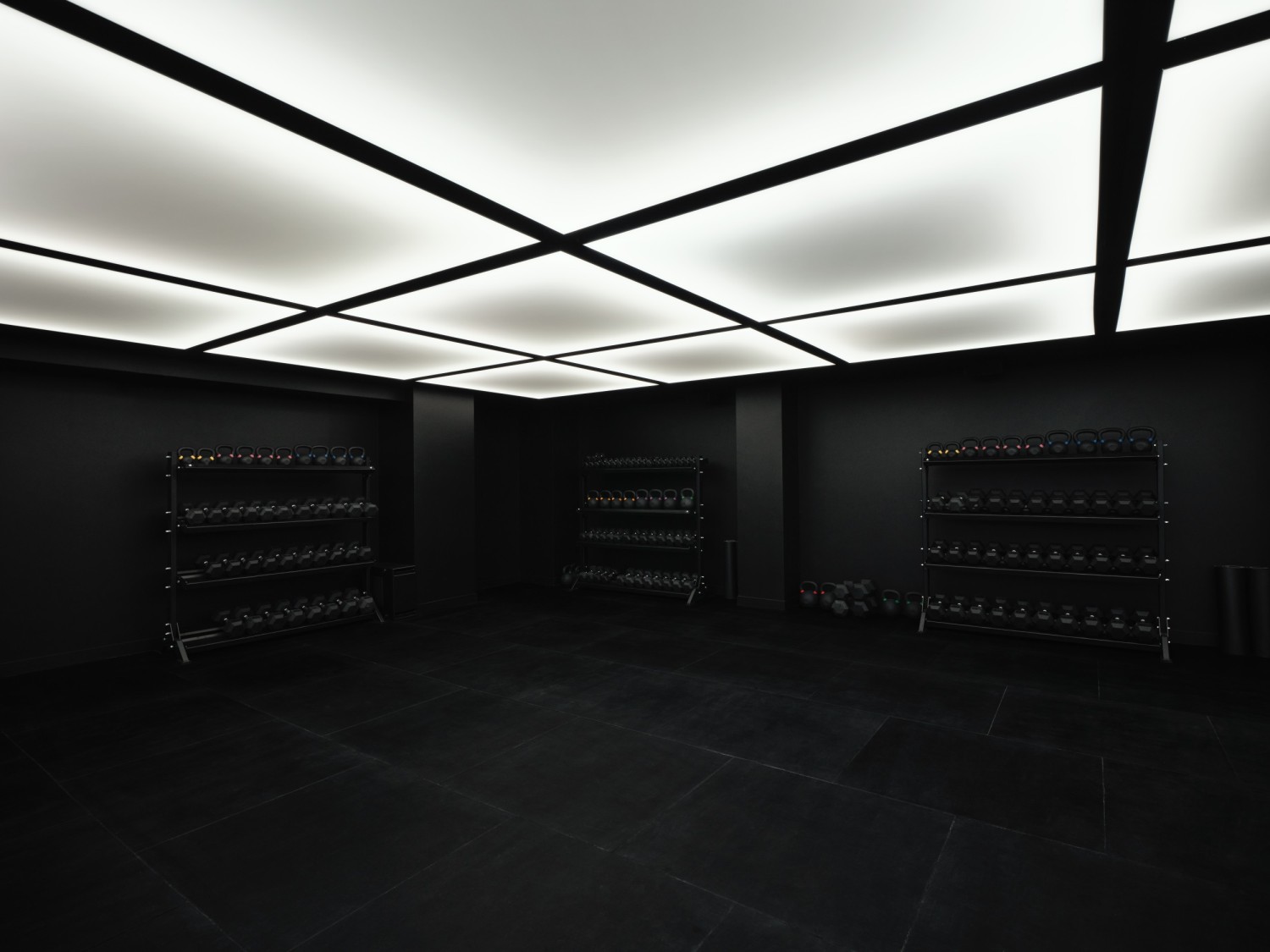
It is precisely this moment of transition — when the heart races and the body takes precedence over thought — that he seeks to translate into the design of the two training spaces. In the group training room, the illuminated ceiling comes to life as soon as the opening jingle begins, built around the sound of heartbeats: the entire surface pulses before a single square lights up to identify the coach. “I like using light as architecture.”
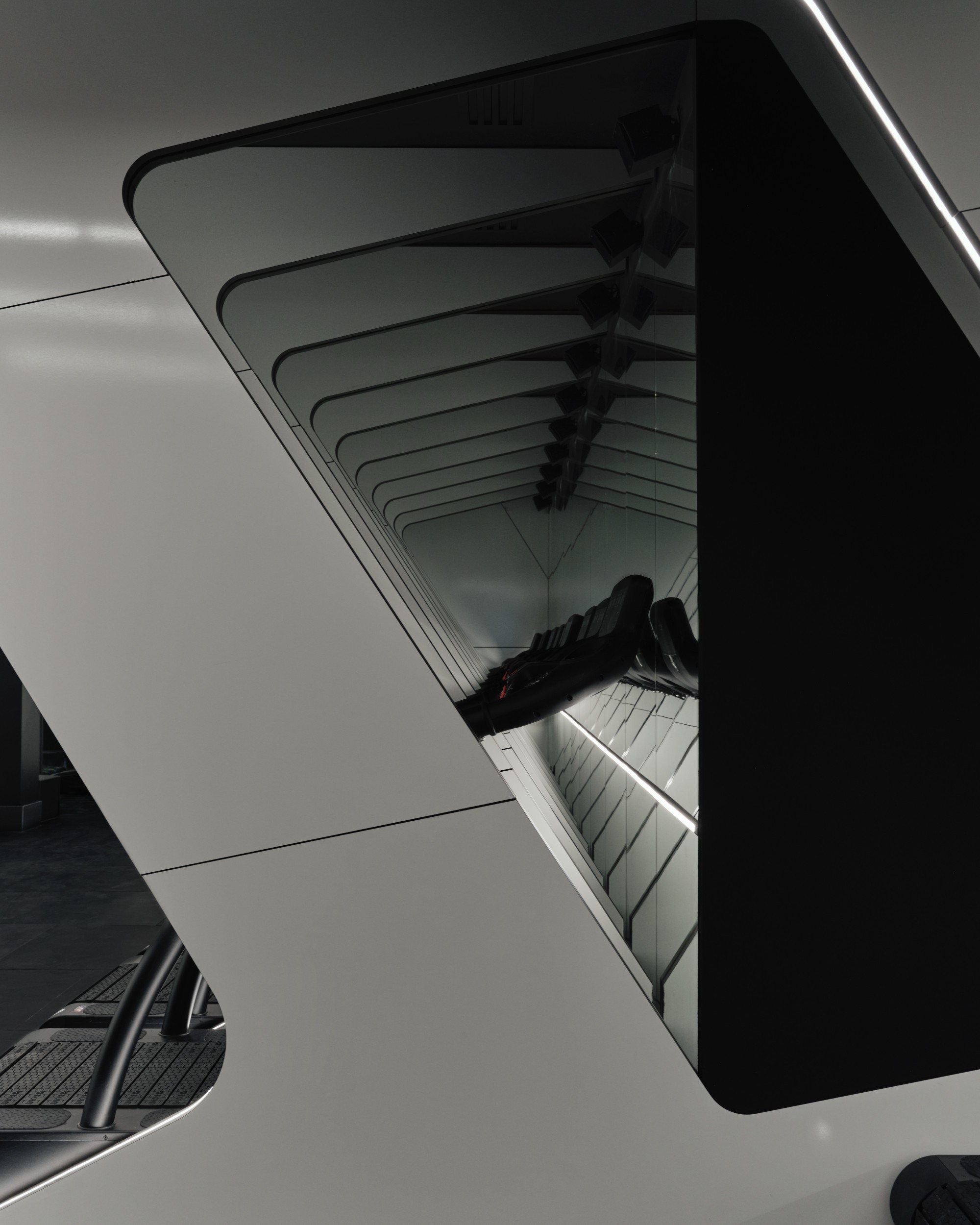
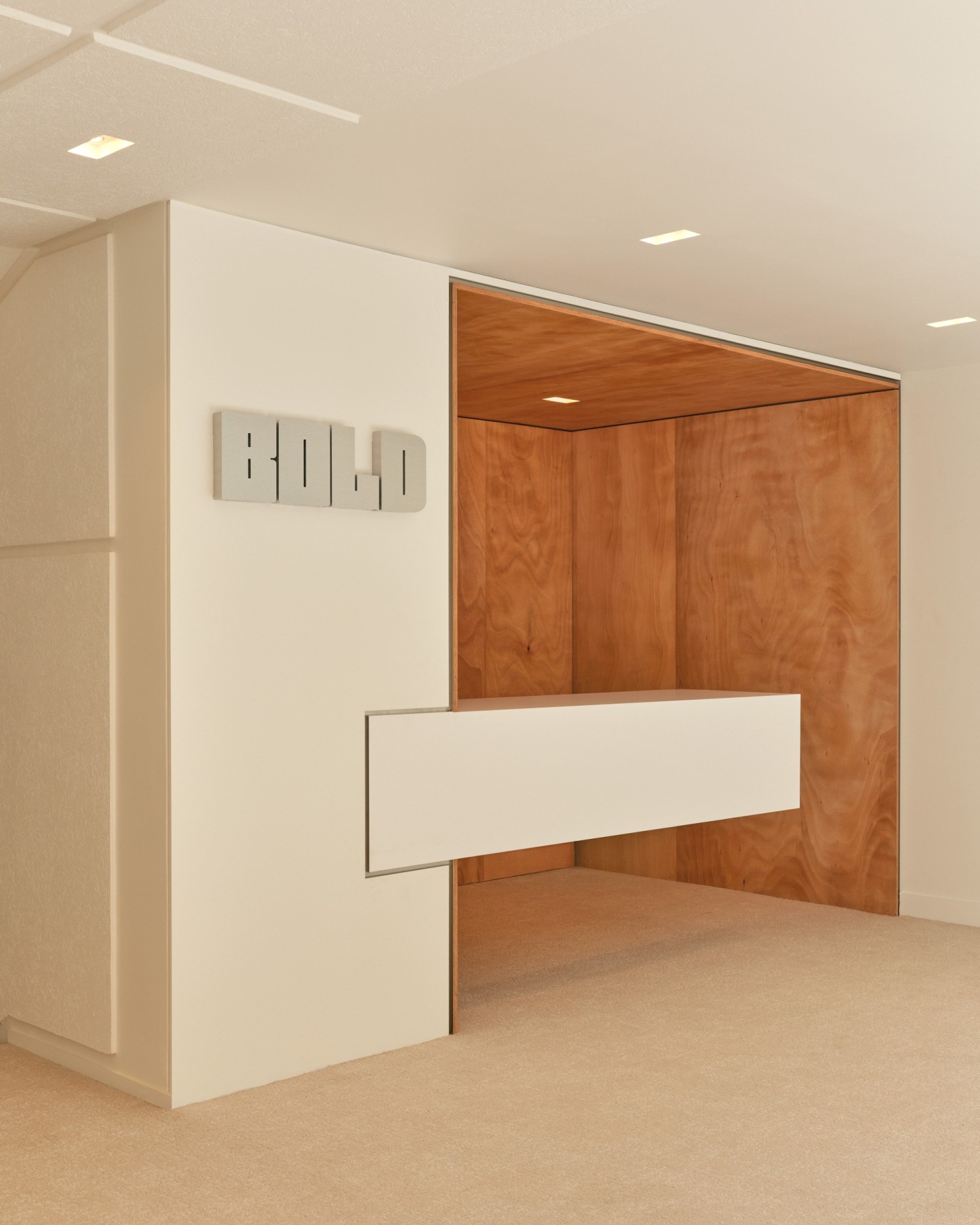
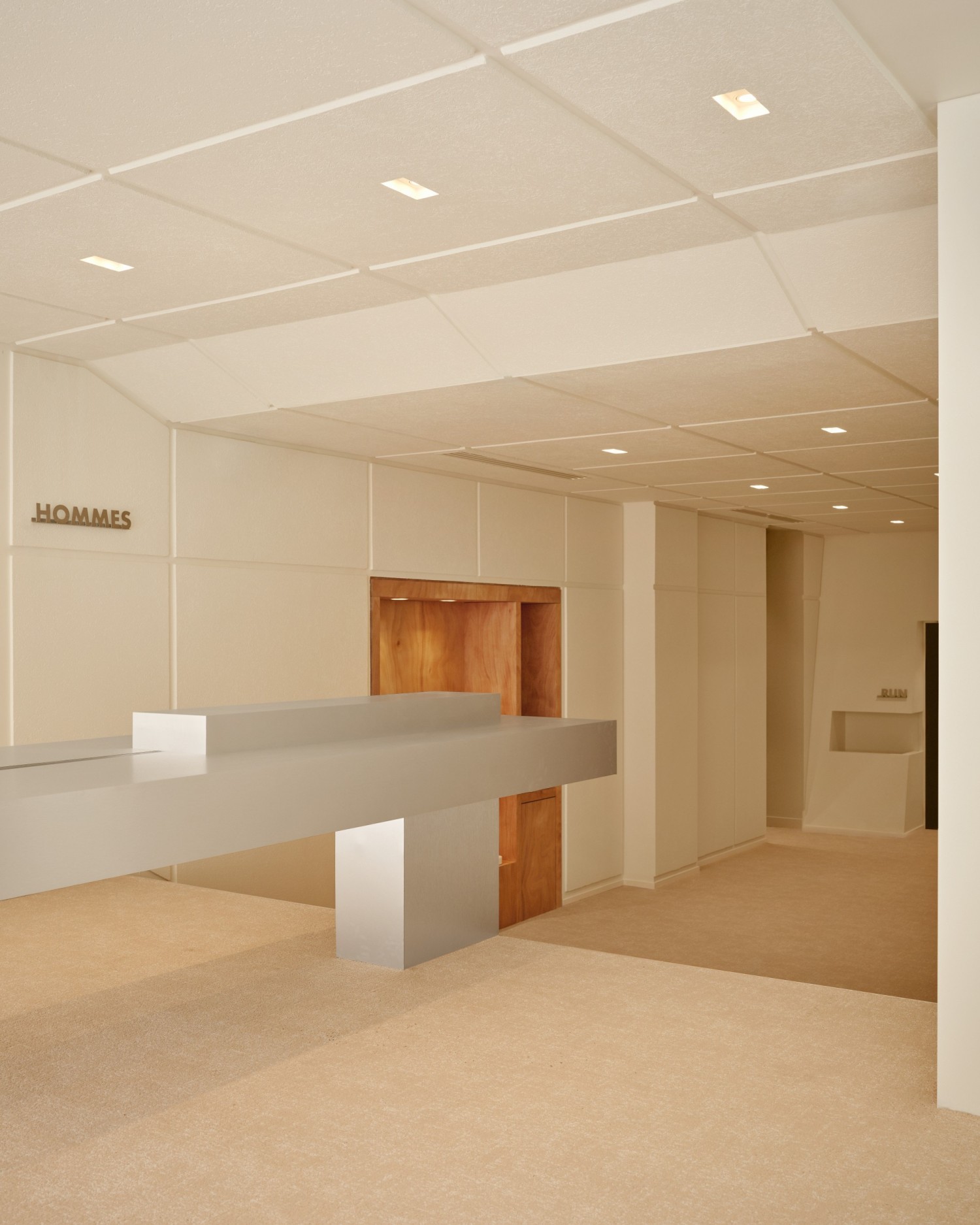
Synchronised with the music, it accompanies the different stages of the session, from the introduction to peaks of exertion, punctuated by recovery phases. Guénaire adapts the same idea to running, an inherently more individual pursuit. Positioned between two screens, runners can nevertheless glimpse their neighbours’ speed through lateral openings. “Athletes are competitive after all, and they compare themselves with one another.” Deliberately positioned behind the partitions, the lighting heightens the sensation of speed: “when the silhouettes stand out against the illuminated background, the machine resembles a rocket, with its engine firing behind it”. Facing a mirror and bathed in flattering light, runners see themselves at their best. Before and after exercise, the lobby and changing rooms offer a sense of comfort. Minimalist, efficient, soft and modernist, cream tones and “American cherry wood” — the architect’s signature combination — create a subdued atmosphere conceived as a decompression chamber between the frenzy of the surrounding neighbourhood and the intensity of the workout. •
photos : BOLD Sport Studio, Rudy Guénaire, Paris, France, 2026 © Robin Le Febvre