Inspiration through material
Process, Baguette Studio • © garaJ
In response to the ecological imperative, the Paris-based design studio Baguette Studio offers a radical and poetic solution: rotomolded natural wax objects, designed to be endlessly remolded and reinvented endlessly. Presented during Paris Design Week 2025, their approach embodies an “optimistic design” seeking to reconcile industry, craftsmanship, and circularity.
In a contemporary design landscape caught between industrial heritage and environmental urgency, Emma Lohner and Philippe Gaud are charting a singular path. Both trained at Strate École de Design, they grounded their practice in real-world contexts from the very beginning. Even before founding the studio, they were already engaged in skills-based volunteering while still students. They designed signage and logistical carts for the charity Les Restos du Coeur in Saint-Denis, developed a cargo bike for food distributions in Paris’ street, and organized workshops in a refugee center in Eindhoven, Netherlands. These field experiences shaped a pragmatic approach attentive to use and social context.
During Paris Design Week 2025, as part of the Factory exhibitions at
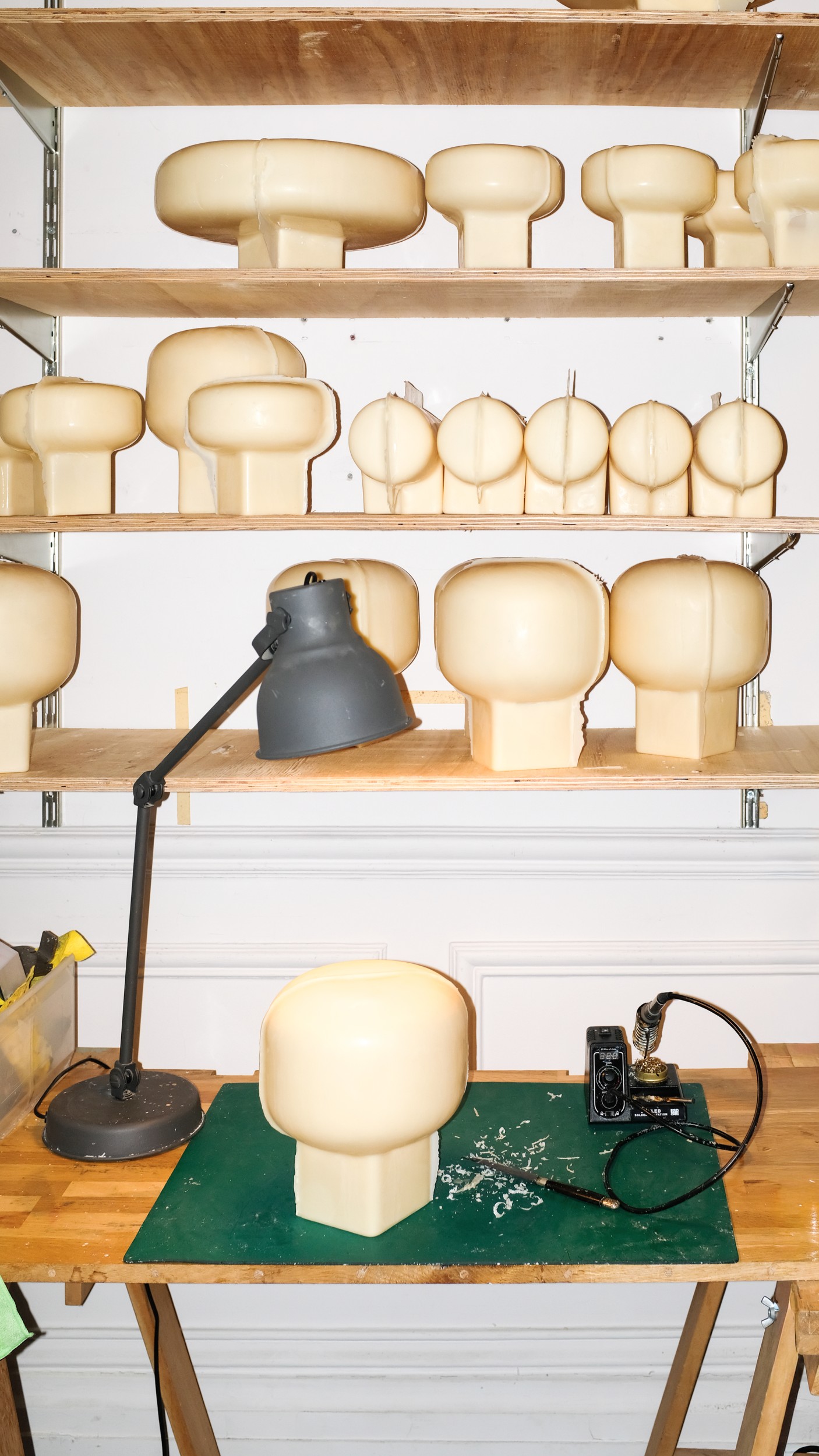
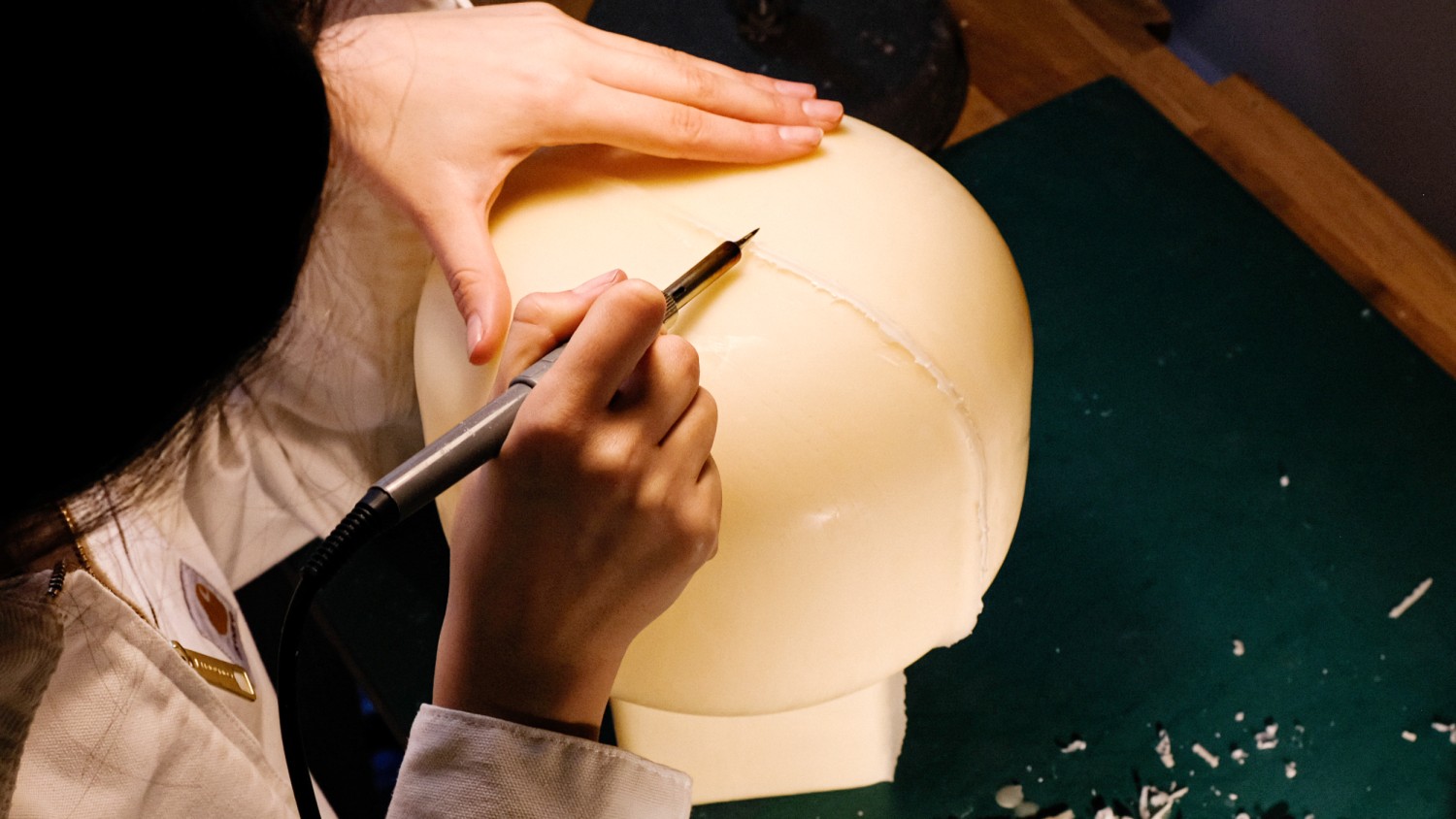
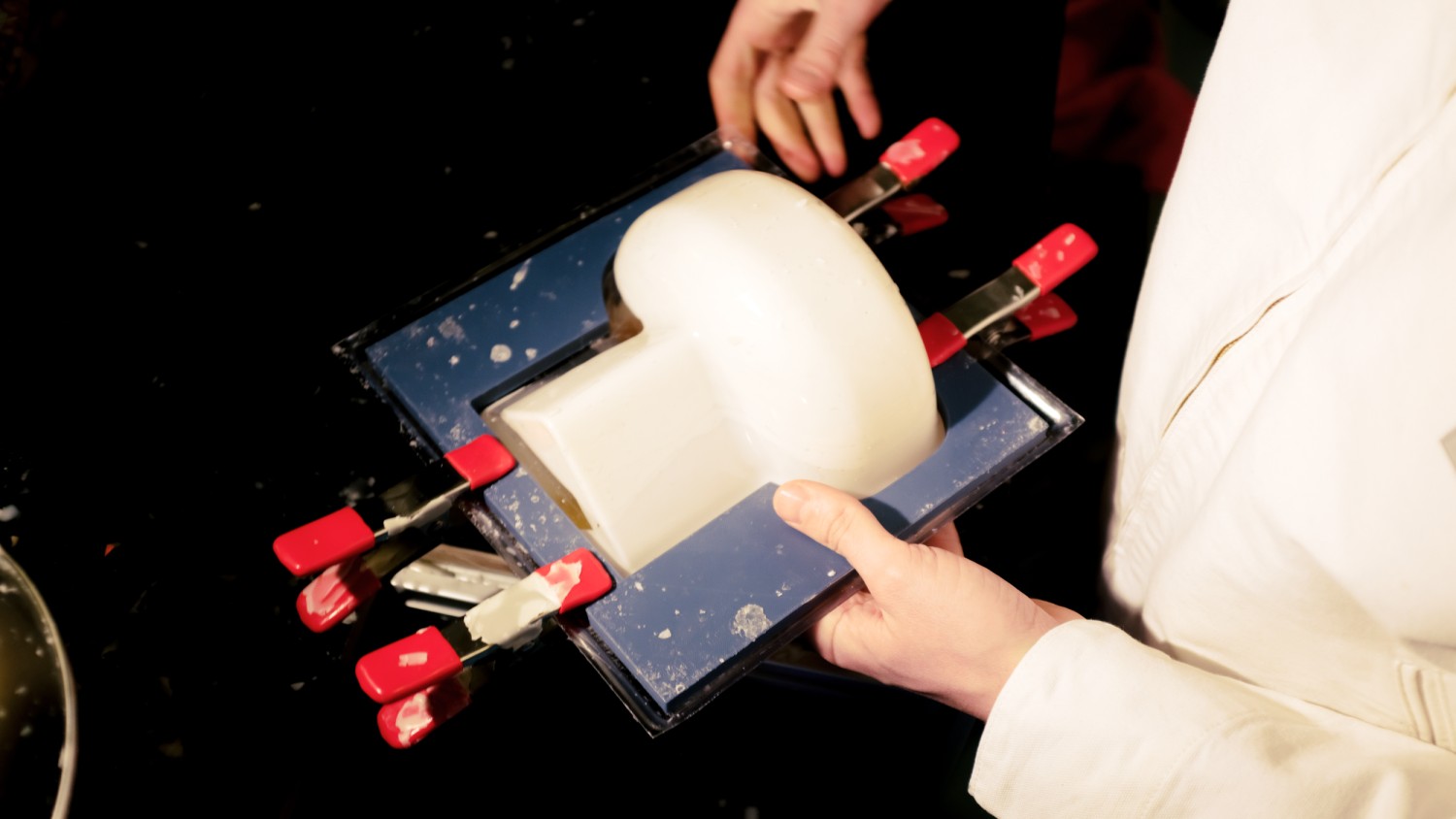
Galerie Joseph, they presented Labo 1.0 the culmination of a year and a half of material research. The installation was conceived not as a static exhibition but as a performance. Visitors could purchase their lamp, which was then produced before their eyes in just forty-five minutes. Rather than relying on existing industrial equipment, Emma Lohner and Philippe Gaud designed and built their own rotomolding machine. Their aim was to “hack” an industrial technique, changing both its scale and its intention.
Traditional rotomolding involves heating plastic inside a rotating mold. Baguette Studio diverts this process: the wax is first heated to around 100°C until it becomes liquid, then poured into the rotating mold. This demonstration of the manufacturing process creates a direct connection between the object and its user.
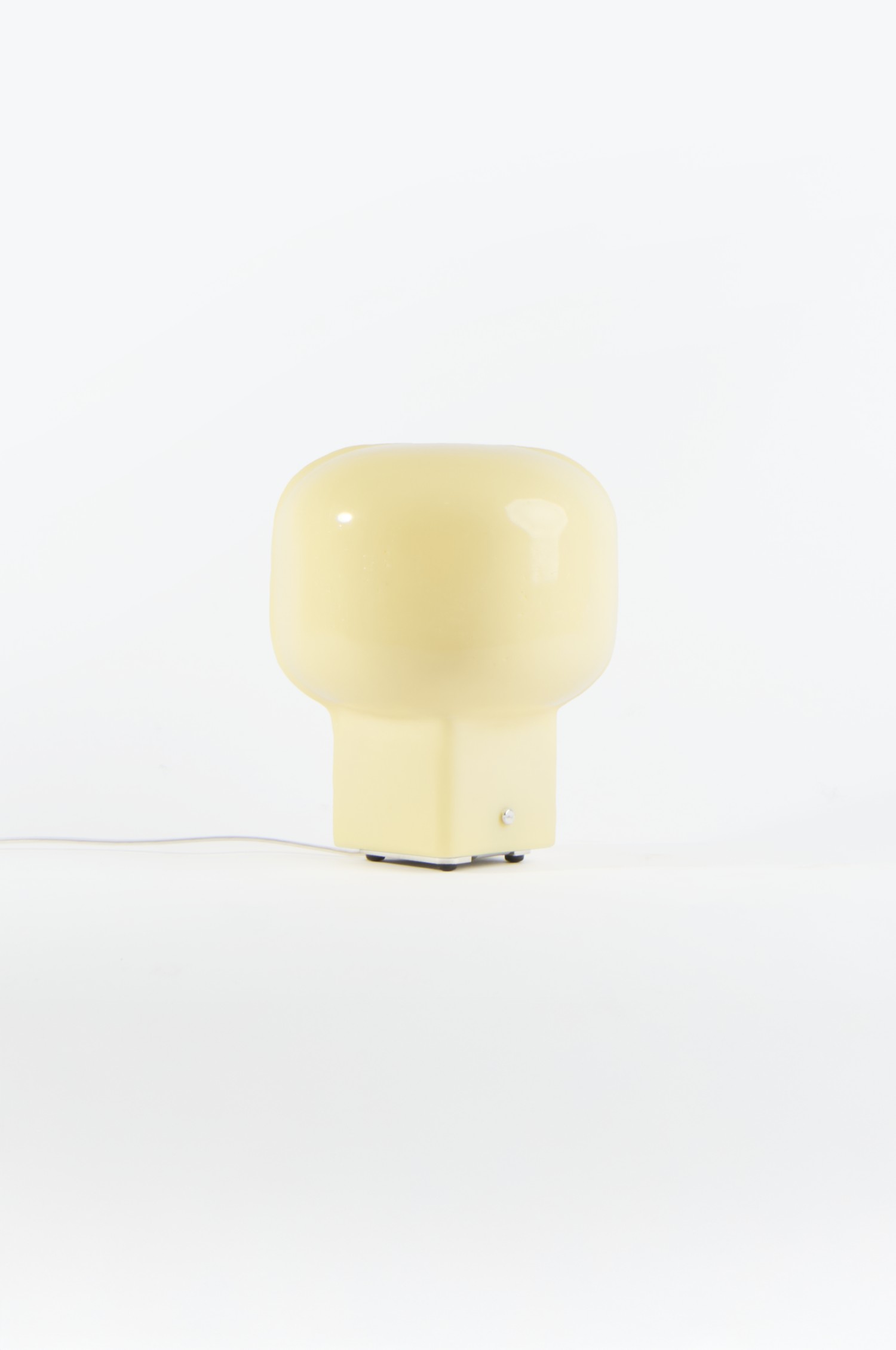
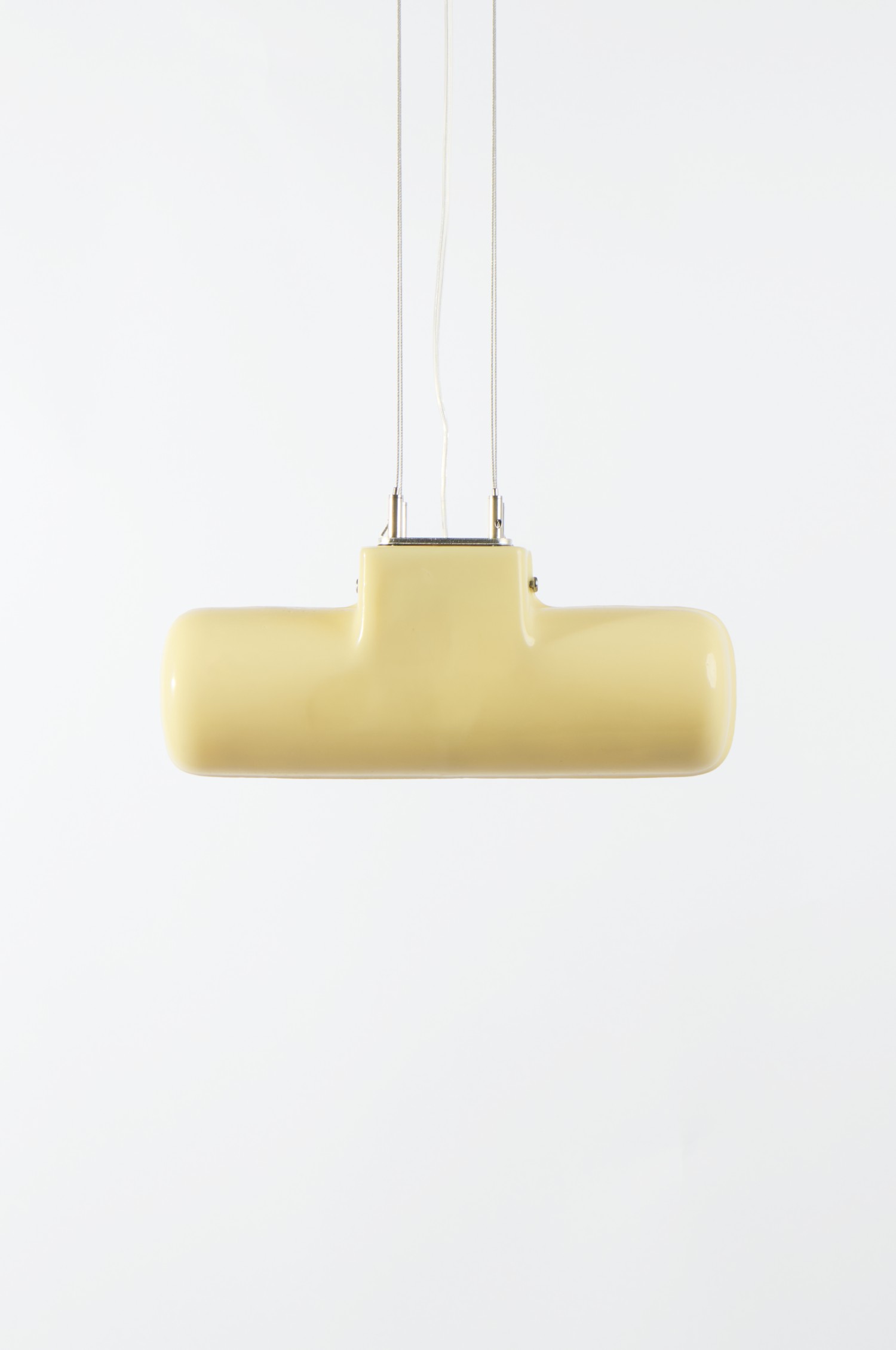
The material itself—developed through extensive experimentation—is a blend of plant-based waxes and beeswax. Once solidified, it must withstand high temperatures, including the 80°C that can occur inside transport trucks during summer. It can also spread light effectively and offers enough rigidity for functional objects while retaining its capacity to be molded, unmolded, and melted again. Through experimentation, the lamp naturally emerged as the ideal application. The layered wax reveals an organic quality and a subtle translucency that enhances the diffusion of light. The lamps are fitted with LED bulbs, chosen specifically because they produce minimal heat, preventing any alteration of the material.
The true innovation of Baguette Studio, however, lies in the economic and symbolic model it proposes. The lamps are designed according to precise material weights—400 grams, 800 grams, or 1,600 grams—corresponding to different sizes and prices ranging from €144 to €312 including tax. What is sold is not an object but a “material capital”. The object can be returned to the studio, broken down, remelted, and transformed into a new model.
The weight system allows combinations: two small lamps equal one medium lamp, and two medium lamps equal one large lamp. To date, around 250 lamps have been produced and sold, reflecting strong enthusiasm for this alternative proposition. Their metal bases are compatible with the system developed by OpenStructures, a Brussels-based studio that promotes a shared open-source metric grid for designers. This compatibility allows the structure to find new uses once the wax has been remelted, further extending the project’s circular logic.
photos: Table lamp, LABO 1.0 Collection, Baguette Studio • © courtesy of Baguette Studio • Process, Baguette Studio • © garaJ • RESEARCH 108 • LABO 1.0 Collection, Baguette Studio • © Guillaume Peretti Gaud • Process, Baguette Studio • © garaJ