Inspiration through material
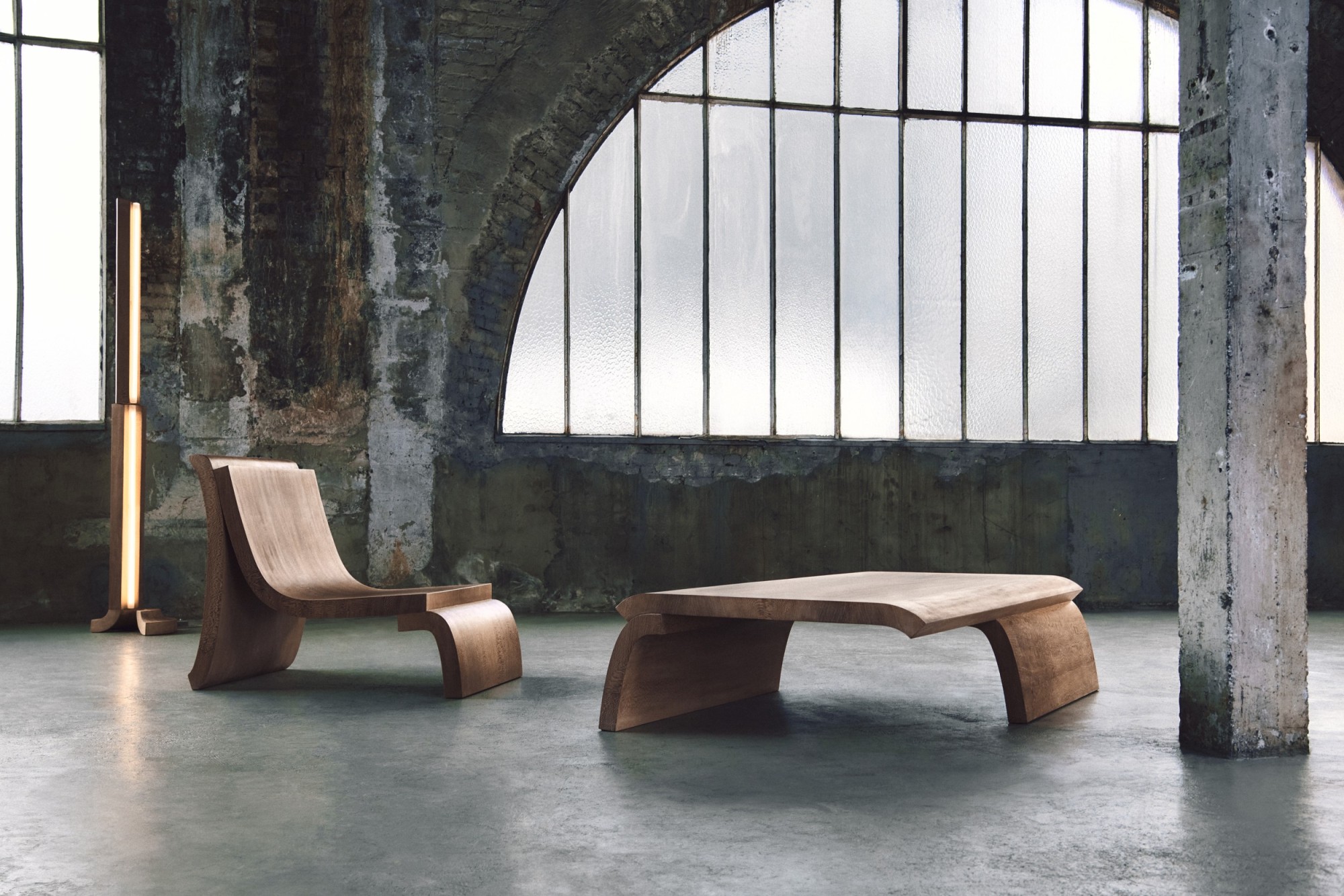
Platane Lounge Chair, Mono Editions, Corpus Studio © Mathilde Hiley
In Milan, amid the vibrancy of the Milan Design Week, French design moves beyond the object to take the stage. With Le Design Défilé, presented in the heart of Brera, furniture becomes trajectory, gesture, and presence. Conceived as an immersive experience by Jakob+MacFarlane, the project reinterprets the codes of the runway to question how we perceive — and inhabit — design today.
Led by Le FRENCH DESIGN, L’Ameublement français and the GEM, the exhibition brings together 53 French creations, reflecting a diversity of expressions, uses, and craftsmanship. Through scenographic storytelling and a collective exploration, it outlines a design in motion, where each piece engages in dialogue with the body and time.
A sensitive and committed approach that the studio develops here as a spatial manifesto, to be discovered through our interview.
3 QUESTIONS TO
Brendan MacFarlane
You describe the show as a “design in motion” experience—how did the runway format help you rethink the relationship between body, object, and space?
Design objects inherently imply the human body, whether through its presence or its absence. Typically, these objects are static—situated in a room or a hallway—meaning they are defined by their placement in space. This tension between presence and absence led us to view the human body as the vital connector between movement, space, and the object itself.
We found the format of the défilé (runway) to be an interesting way to suggest this presence—but also with movement. Unlike a traditional exhibition, the runway enables the spectator to witness a sequence of designs. This temporal element allows for storytelling; you can see how ideas evolve or combine (or not) over time. By applying the défilé format to design, we move beyond the singular piece to explore its larger context. It invites the spectator to ask: Are these pieces related to a larger idea? Do they belong to a story? What is that story? Ultimately, this approach enriches the visitor’s understanding of the relational qualities and narratives that design objects often silently imply.
What does this idea of movement reveal about how contemporary design is evolving today?
The fashion world is becoming increasingly interested in design, suggesting that clothing is no longer viewed merely as an “extra skin,” but related to space for broader creativity. We are now asking deeper questions about the relational qualities of that skin and how it is impacted by our environments. As we face climate extremes, for instance, this changeable layer of the body must become more sensitive and intelligent—acting as a functional tool for cooling or warming, depending on the spaces in which one finds themselves.
This environmental shift necessitates a stronger relational aspect between the body and space, expanding the “story” of fashion until it naturally encompasses design objects and entire environments. And vice versa, it implies that design objects are no longer just inactive background elements; they are becoming more engaged and “active” within their environments. By adopting the movement of the défilé, we explore this contemporary condition where design is no longer static.
How did you translate the diversity of French design into a single, coherent spatial narrative?
We achieved this by shifting our focus from the individual objects to the larger narratives present in the design world today. We looked at the histories and contextual questions behind and between these pieces, specifically the relationship between the object and the human body.
The défilé provided the solution through the concept of movement. By centering on the human body, we were able to explore what is seen and unseen in a design object. Bringing these elements together—body, object, and motion—created a new, singular narrative that could accommodate a diverse range of work.
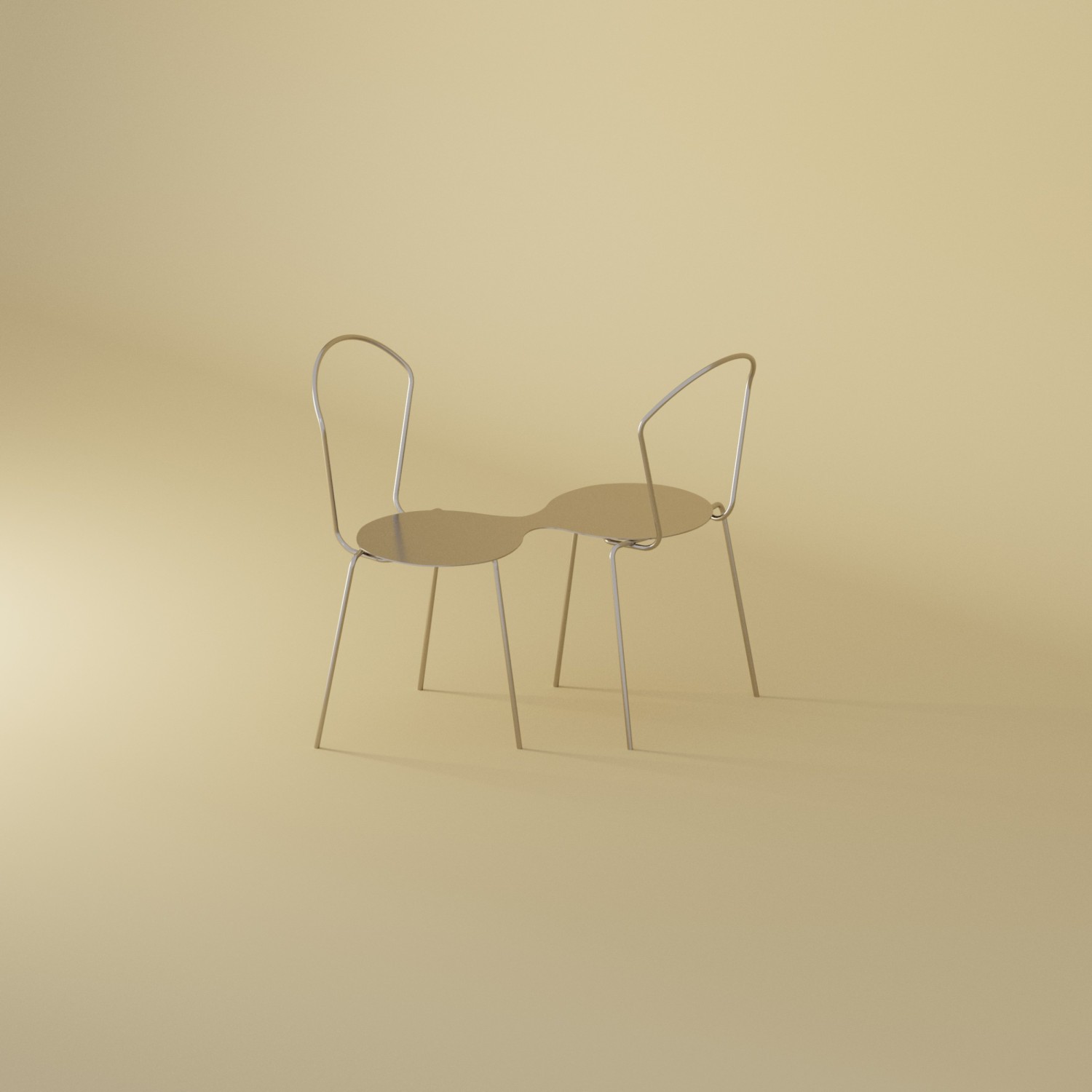
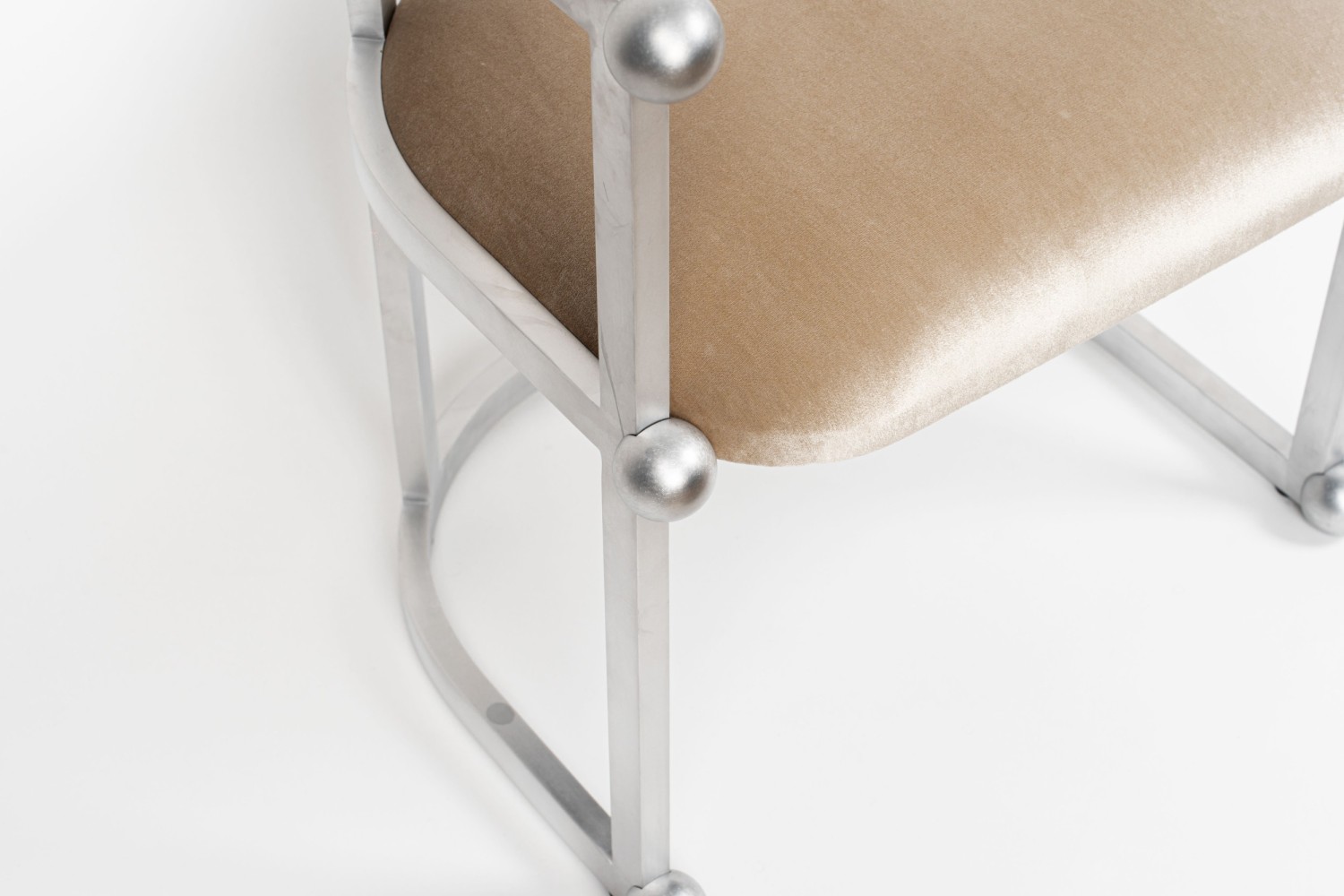
photos: Confident Seat, Airbornen Maxime Lis © Maxime Lis • COSMO II Chair, Maison Pouenatn Haddou & Dufourcq © Aurélien Gerber