Inspiration through material
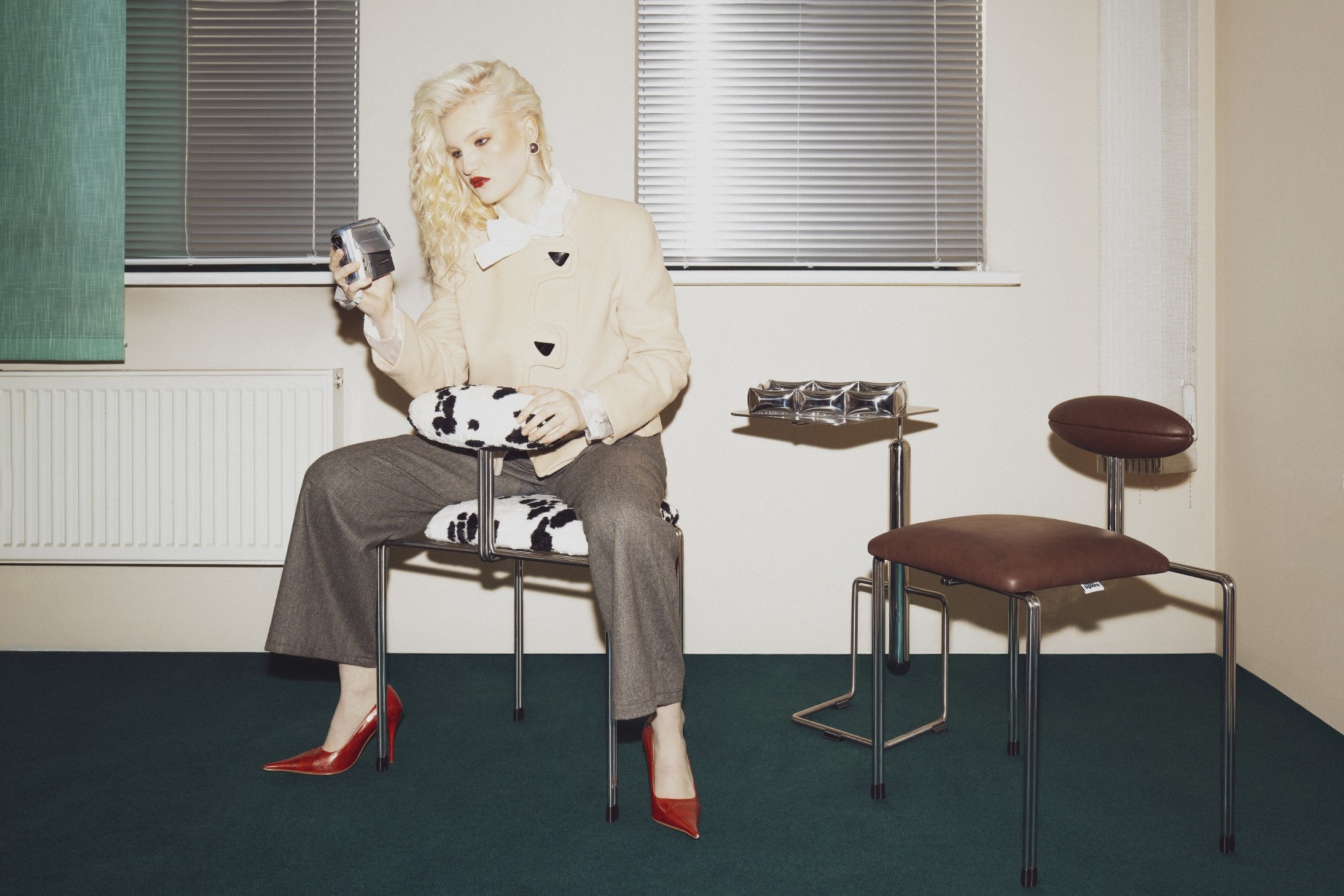
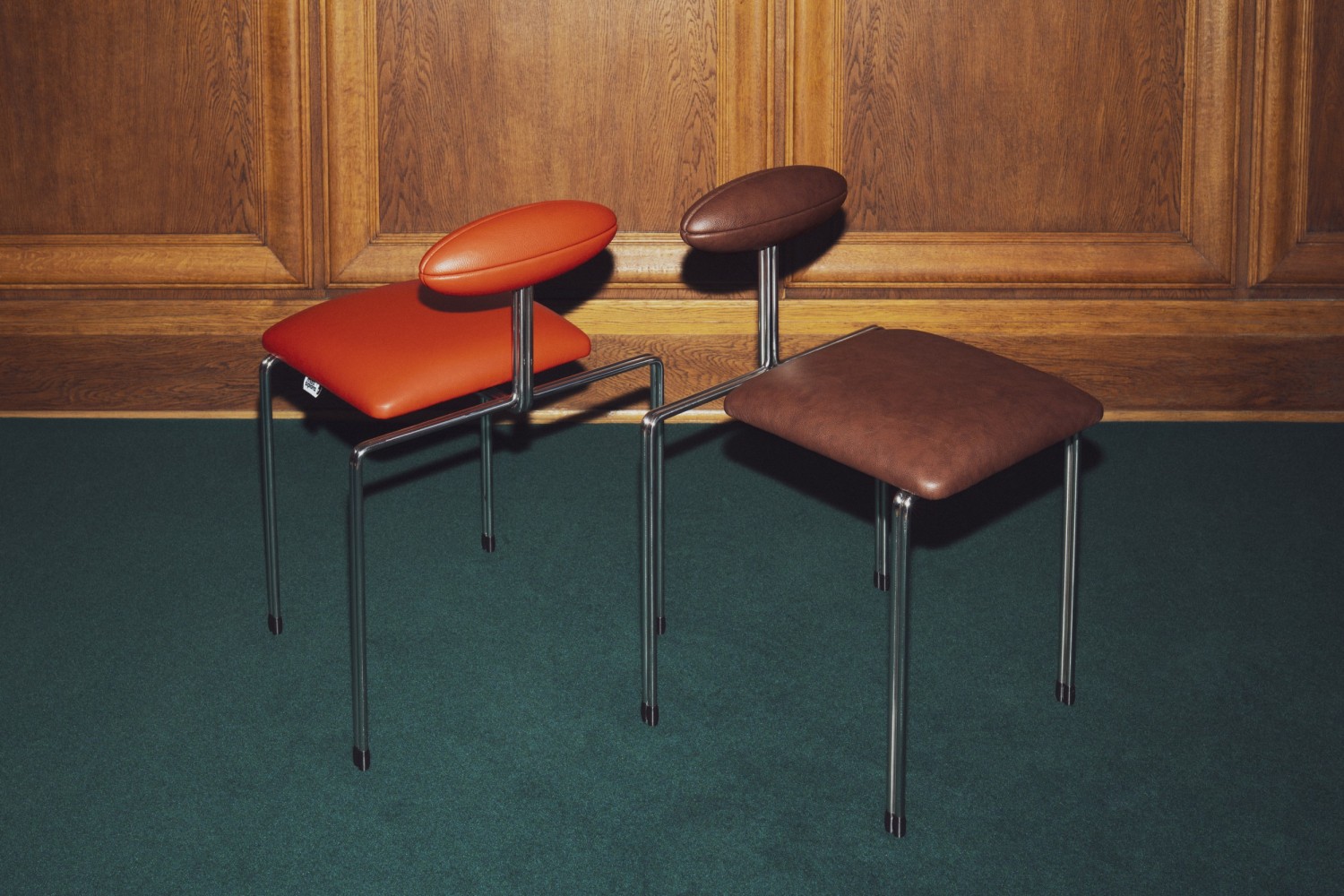
Zeppelin chairs, Mati Sipiora • © Mila Łapko
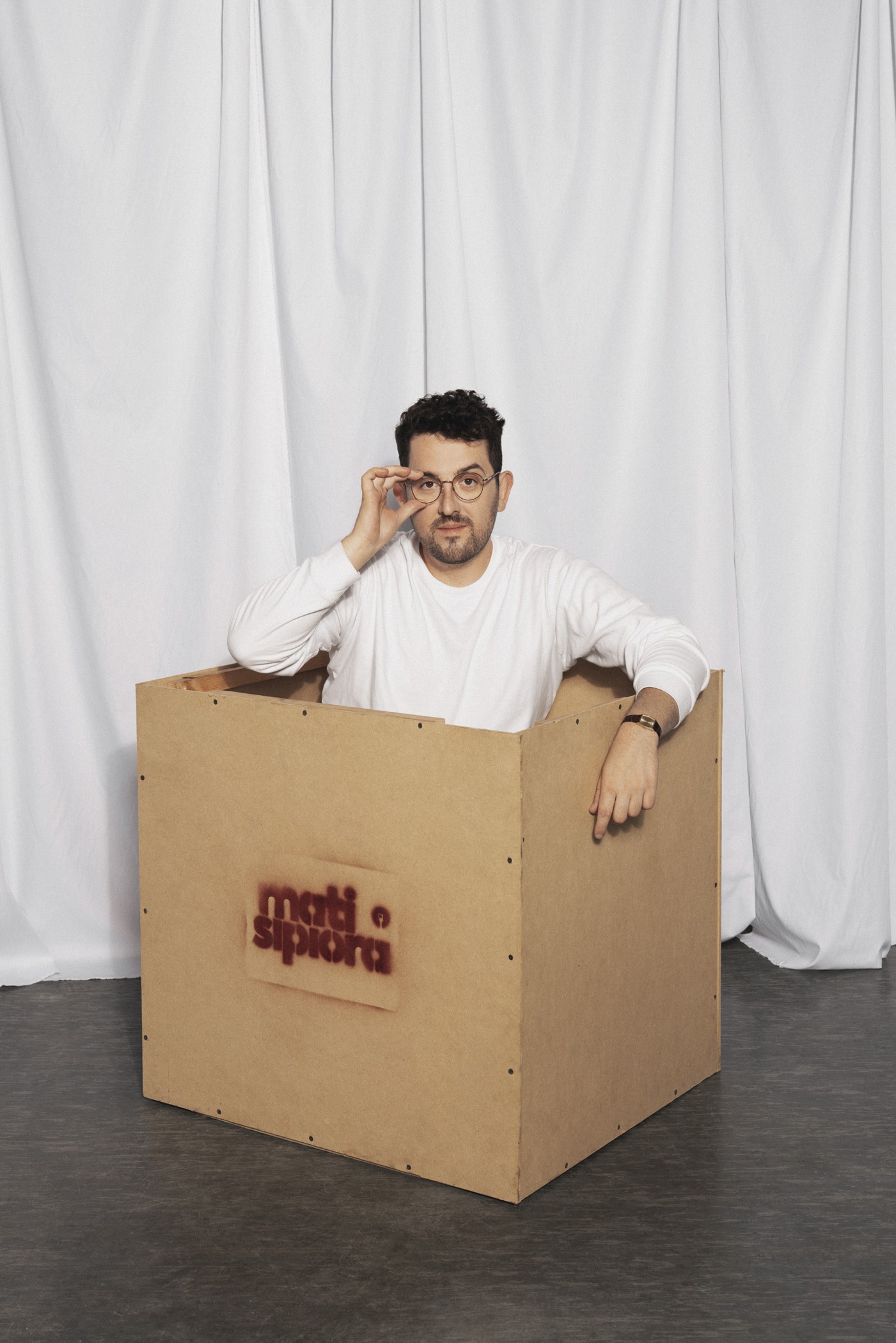
Always maintaining a conscious and measured balance, his works—subtle and nuanced—oscillate between functional piece and genuine work of art. Polish designer, lecturer and artist Mati Sipiora creates with a sense of freedom and calculated irony, deliberately blurring interpretation.
Ten years ago, he began his career immersed in the world of medical design, where he was responsible for creating and developing a series of medical devices. In 2021, shortly after studying industrial design in Berlin, the creative felt a visceral need to return to his hometown of Gryfino, steps away from the German border. There, in his father’s metalworking workshop, his desire to experiment resurfaced. Surrounded by the tools and materials of his childhood, Mati—curious by nature—began working with metal in a more direct and intuitive way. He presses, bends and twists it, attentively observing the results.
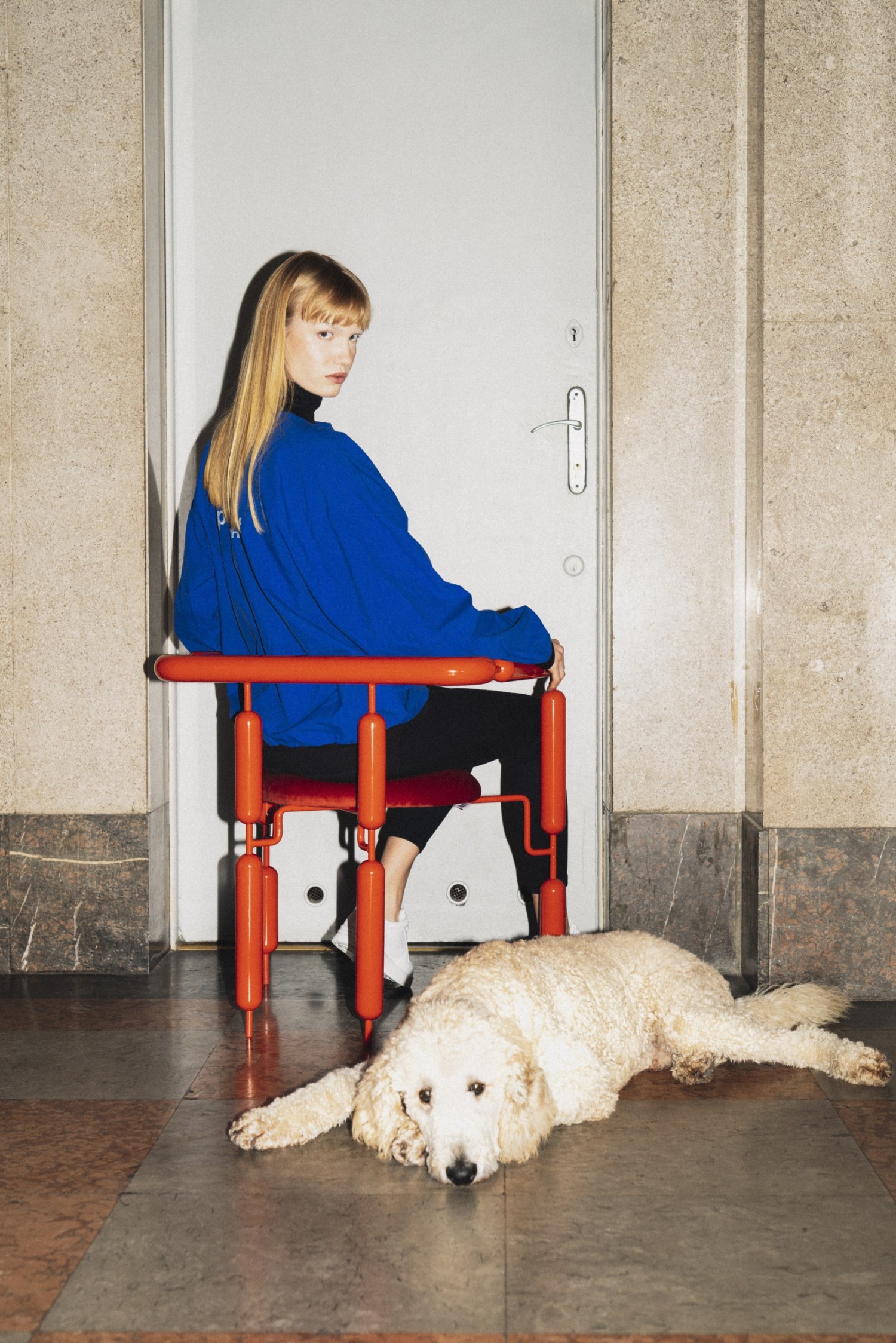
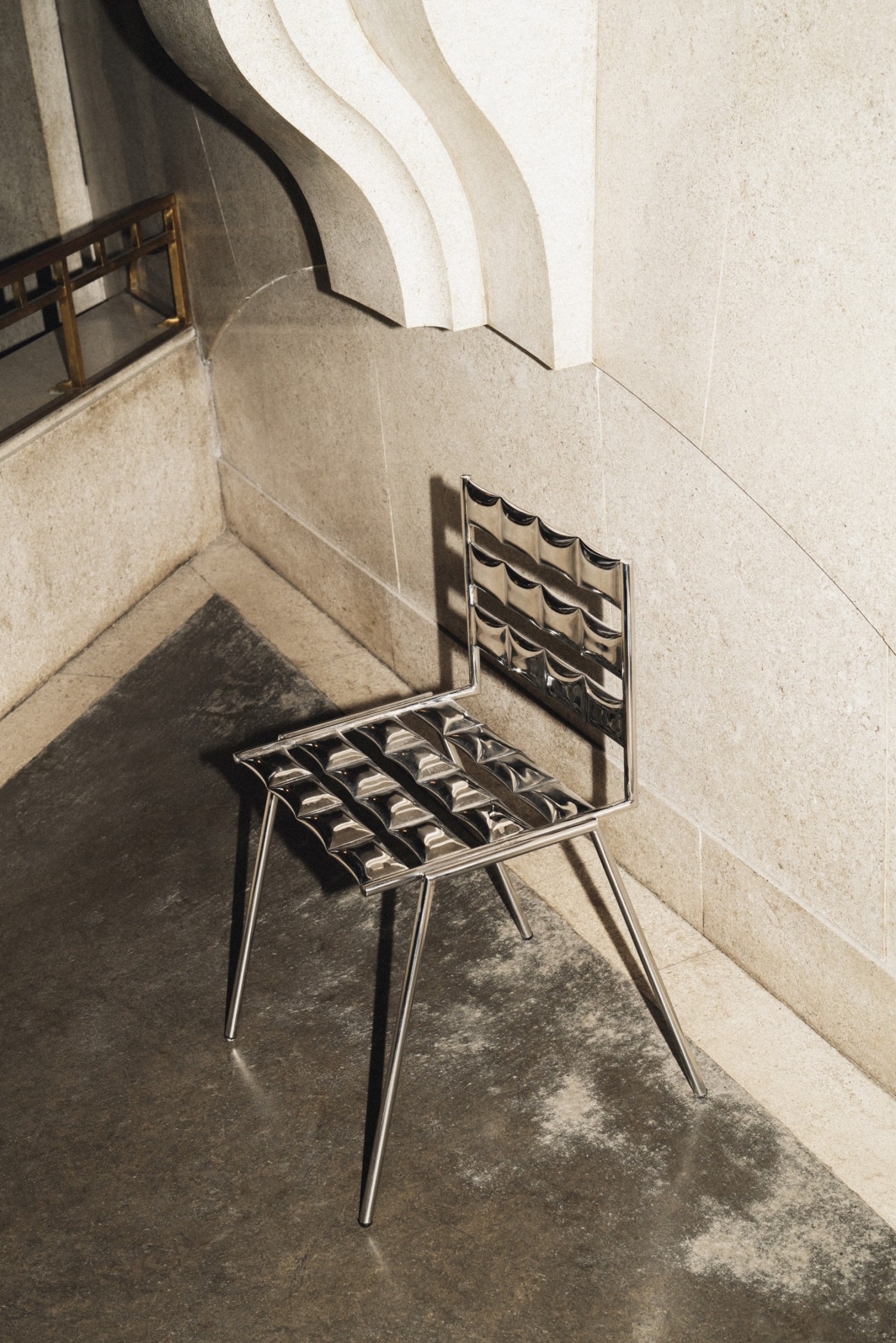
This approach soon gave rise to what would become his first collections —FUTUROOM and later COSMIC—including pieces largely imagined from pipe fragments and production leftovers, inspired by the retro-futurism of the 1970s, a theme that continues to influence the majority of his creations today. Among the iconic works one is born almost by chance: the Poodle Chair. A victim of its own success, the chair now comes with a one-week production time and a waiting list of more than six months. Composed of industrial leftovers—the remains of a fountain sculpture depicting a fish surrounded by reeds (a project undertaken by his father)—the seat reuses the plant’s rounded heads to create a singular silhouette.
Long fascinated by Polish painting, futurist and modernist movements, and a constellation of artists and writers such as Carol Christian Poell, Maria Jarema, Wojciech Fangor and, more recently, H. P. Lovecraft, Mati Sipiora conceives avant-garde designs infused with irony. Among those who have shaped his imagination is Stanisław Lem, with his speculative universe bridging science, philosophy and metaphysics. “For some of my creations, I try to project myself and see whether my furniture could exist in the world he imagined in Polaris, he explains. It is a way of questioning design and its place in the future. Indeed, the designer enjoys stretching and challenging the delicate boundary between art and furniture. Between contemplation and practicality, and refusing the label of a “hardcore collectible” creator, his works occupy a deliberate in-between space: visually intriguing and sculptural, yet fully functional. Neither autonomous artworks nor simple utilitarian objects.
QUESTIONS TO
Mati Sipiora
You say your creations exist at the boundary “between functional furniture and artefact”. Why?
I’m interested in the tension between utility and perception. A piece can perfectly fulfill its function, yet its proportions, materials or certain formal details may disrupt the almost automatic way we usually interact with furniture. This slight disruption creates a moment of awareness: the user no longer handles the object mechanically but instead observes and experiences it more attentively. It stops being perceived as a simple tool. It is within this intermediate space that, in my view, design becomes expressive. It no longer merely answers a function; it begins to convey emotion, narrative, or even a form of contradiction.
What motivates your work, and how does the spirit of “troll design” resonate in your practice?
Above all, it is the desire to question what we expect from contemporary furniture. My pieces may appear ironic, sometimes deliberately uncomfortable—it is, in a way, an act of rebellion. For me, furniture can and should exist beyond the form of a “Netflix couch”! Working with slightly altered proportions in a world guided by repetition becomes a form of trolling. My approach challenges the assumptions we project onto objects. We expect a chair to be comfortable and practical, and it is within this gap that irony emerges—a critical space that invites us to rethink our relationship with design.
We play with the viewer’s expectations by introducing surprise through material, form or proportion, opening a space of tension between anticipation and real experience. This slightly uncomfortable gap encourages a more conscious relationship with the object. Trolling also means shifting design outside overly controlled systems—leaving room for experimentation, producing manually in a small workshop in limited quantities, and questioning dominant expectations around efficiency, accessibility and standardization in design.
Can you tell us more about your latest project?
Inspired by cosmic and futuristic narratives, the Zeppelin chair—named after the airship—pays tribute to the technological optimism of the early twentieth century, to that sense of elevation and ambition associated with the desire to touch the sky. Charged with a fascinating historical ambiguity, the Zeppelin symbolizes both progress and human aspiration, but also fragility and risk—a duality that resonates with my approach to design. I have always been captivated by the unique shape of the balloon, both beautiful and timeless, suspended between engineering logic and poetic presence. Here, this form and structure inspire the seat itself, exploring the tension between monumentality and delicacy. •
photos: Zeppelin chairs • Cosmic chair • The Poodle armchair • Mati Sipiora • © Mila Łapko