Inspiration through material
Design in Residence Paris-Marrakech 2024 • © Maxime Cardin
Initiated in 2022, Design en Résidence is an international cultural cooperation project centred on design and métiers d’art, founded by Karine Scherrer, Samia Herrag and Caroline Naphegyi.
Its first Franco-Moroccan edition brought together twenty students from École Boulle and INBA-Tétouan, under the artistic direction of Élise Fouin and Hicham Lahlou, culminating in an exhibition at the Bab El Kebir gallery in the Oudayas, Rabat. Building on this first experience, a second edition was launched in Marrakech under the artistic direction of Steven Leprizé and Réda Bouamrani.
Design and craftsmanship. Sister disciplines or opposing forces? It is an enduring question that Réda Bouamrani, Moroccan designer and design mentor for the residency, seeks to answer. “The contemporary gesture elevates ancestral savoir-faire. Collaborating with cabinetmakers, metalworkers or ceramicists means celebrating a cultural and human intimacy, while bringing emotional and narrative depth to my creations. More than an aesthetic or functional approach, design becomes a living connection, allowing centuries-old techniques to be reinvented through a contemporary perspective. These collaborations go beyond the object itself. They convey a universal message of exchange, identity and cultural unity, making design as diverse and infinite as the hands that shape it.”
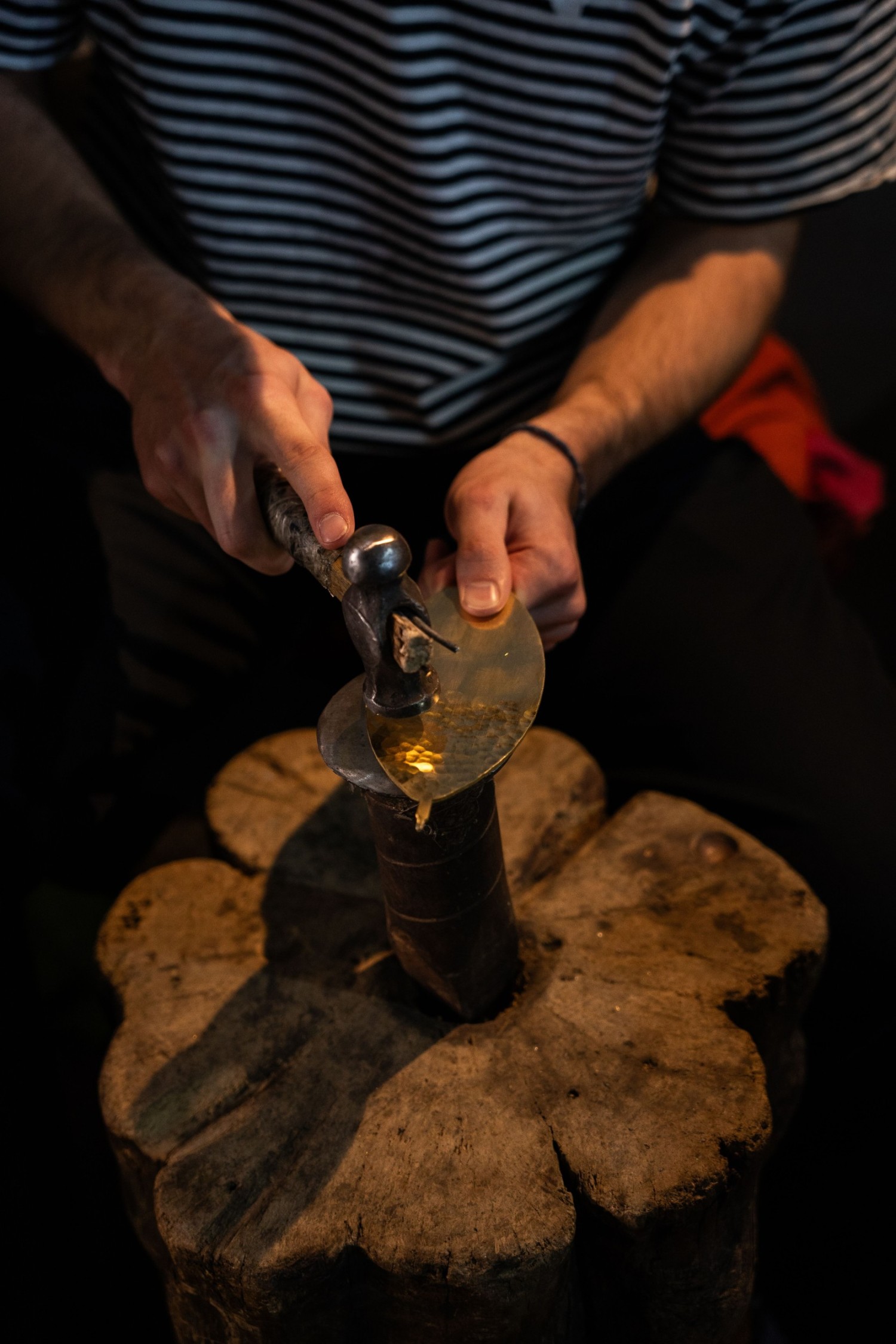
Another part of the answer can perhaps be found in the pieces resulting from the cooperation between the École des Beaux-Arts de Casablanca and École Boulle. As part of Design en Résidence, students from both shores of the Mediterranean immersed themselves in Marrakech’s savoir-faire, exploring this unique heritage through design. Led by designers Réda Bouamrani and Steven Leprizé, the collaboration revolved around the world of the hammam. Working in pairs, the ten students explored five areas of expertise — ceramics, embroidery, cabinetmaking, metalwork and olfactory identity — in partnership with craft workshops. Ano- ther aim was to encourage sustainabi- lity and intergenerational transmission by bringing the students together with Moroccan master craftspeople, also known as Mâalem.
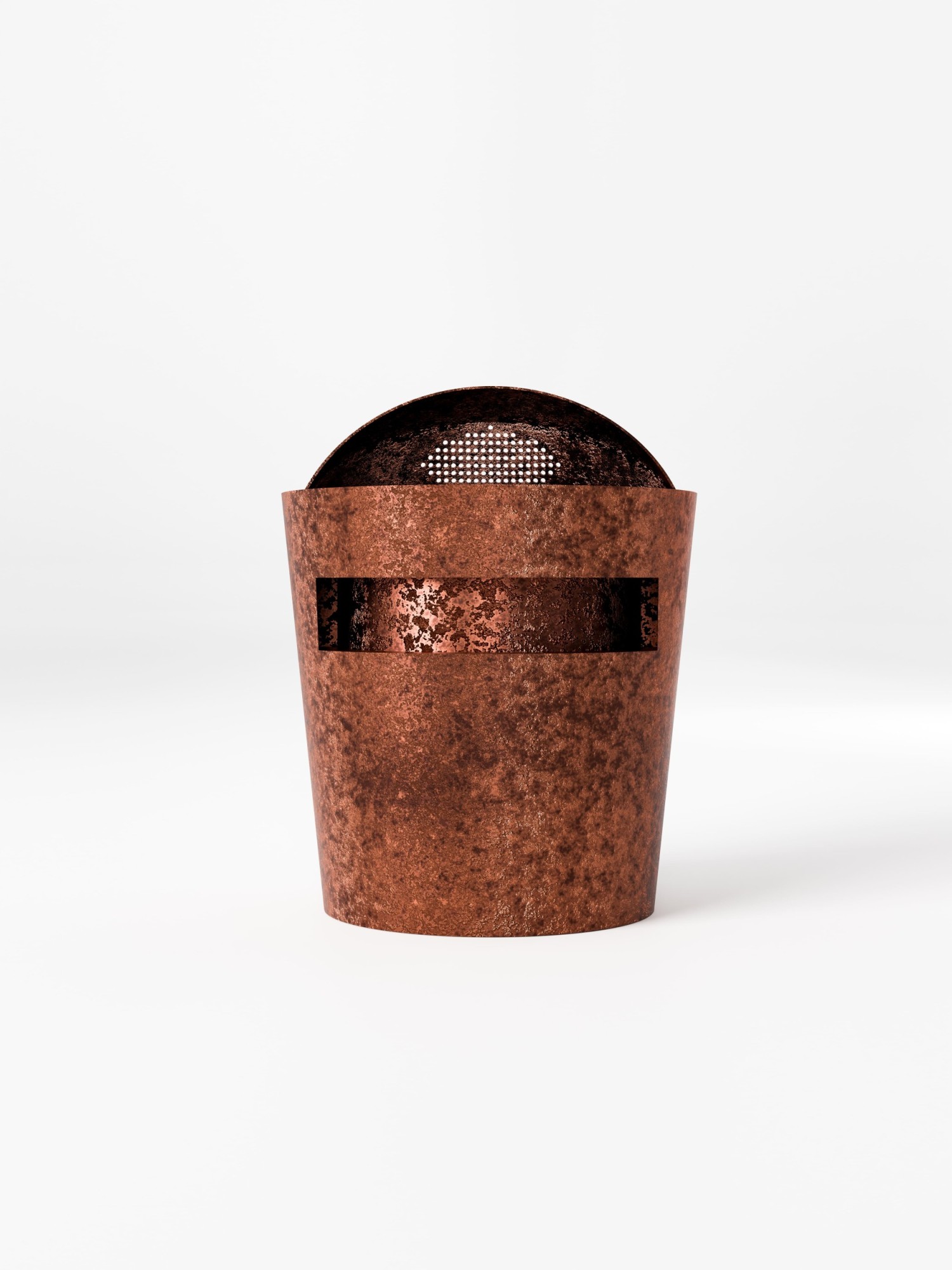
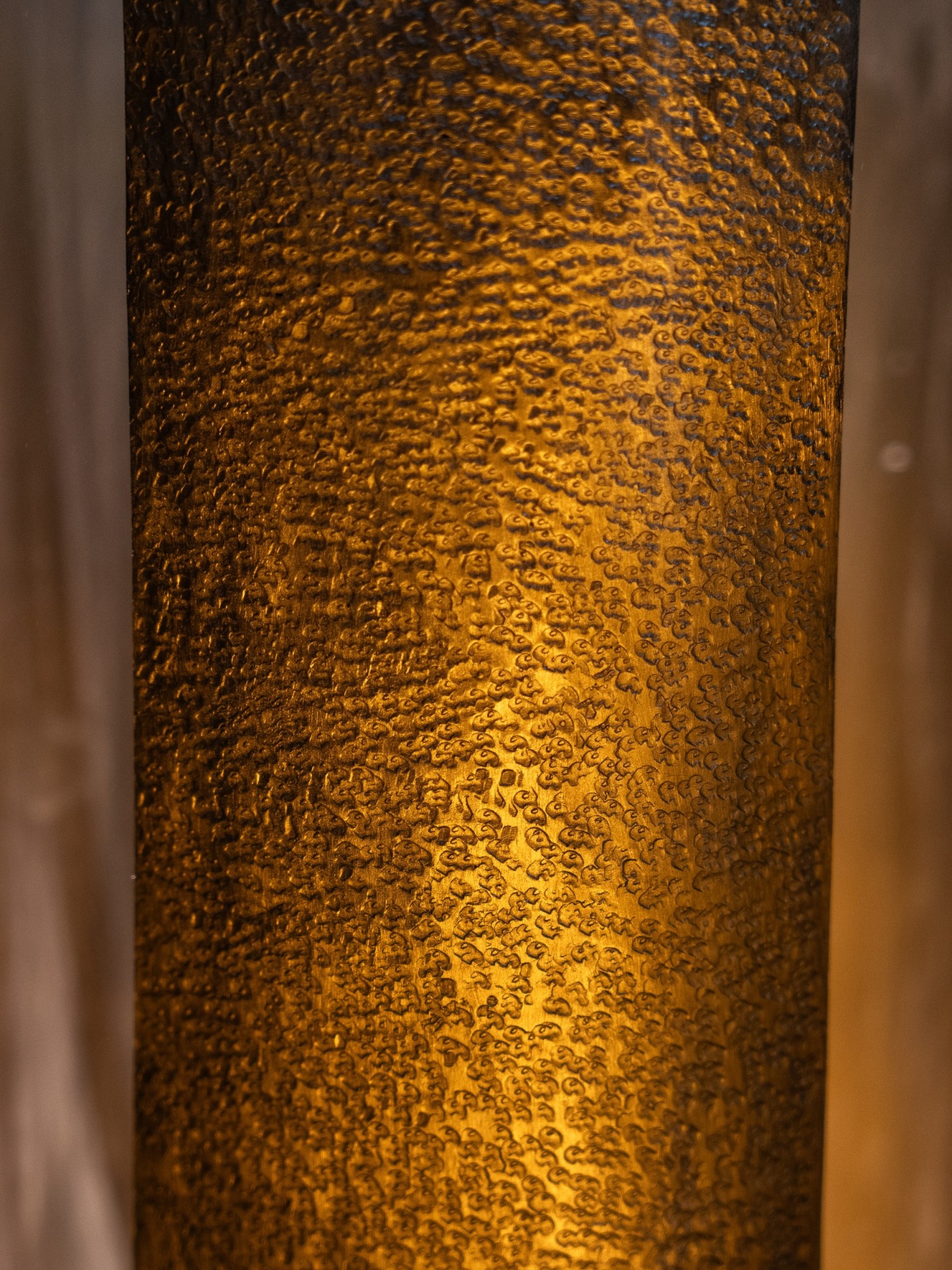
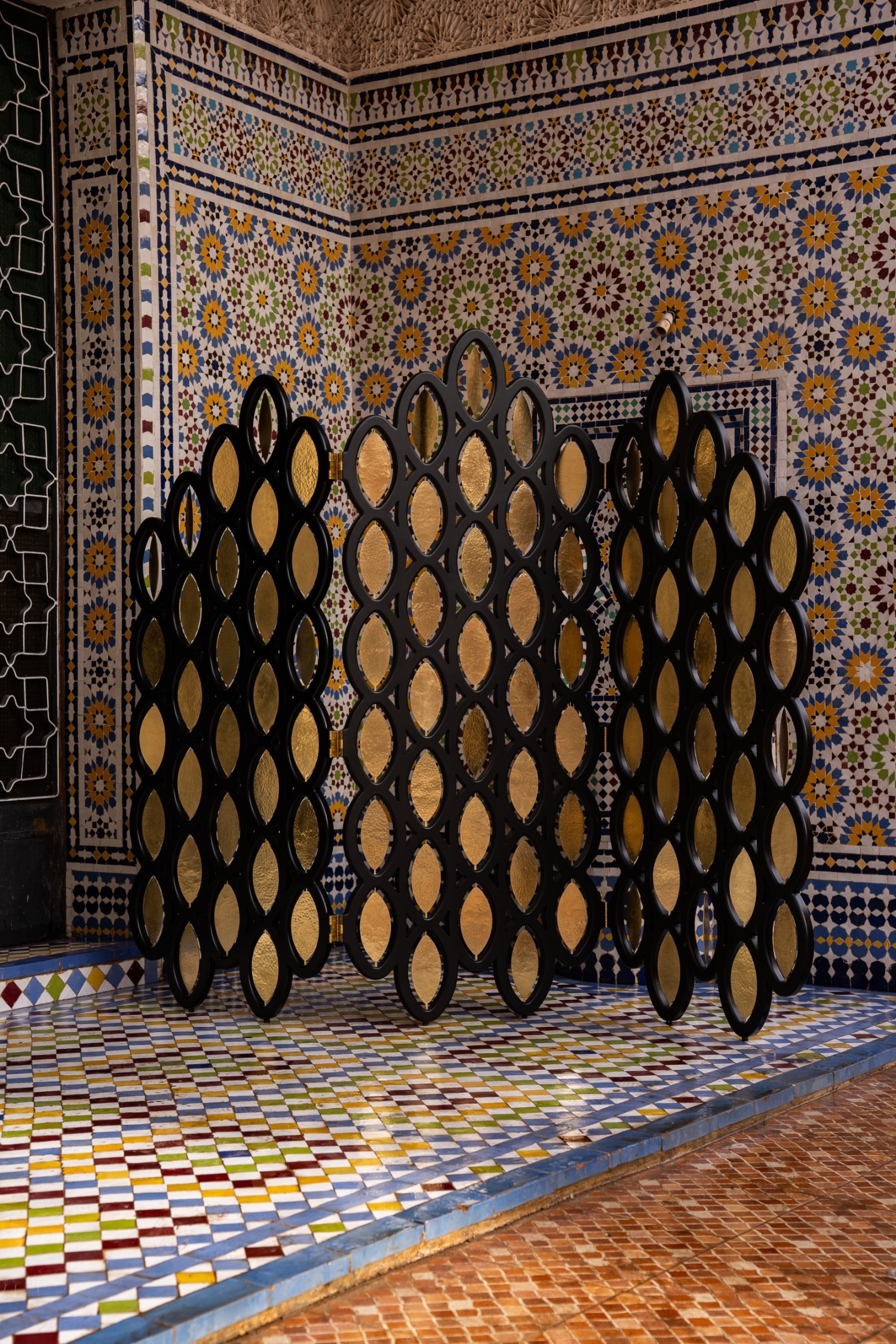
This fruitful encounter gave rise to a whole array of pieces. Among them, the Stel-Keb collection comprises a tassa, used to collect the water needed for body care, and a basin. Both are made from blowtorch-oxidised copper, the mottled appearance of rust and suggesting the humid atmosphere of the hammam. Other metal creations include the Kasba brass lamps, whose tubular forms recall reeds. Brass also features in the elegant Taddagt screen, inspired by the silhouettes of argan nuts, with the fruits suspended on a wooden framework. For the Limoun fragrance diffusers, Moroccan walnut was selected, notably for its woody scent.
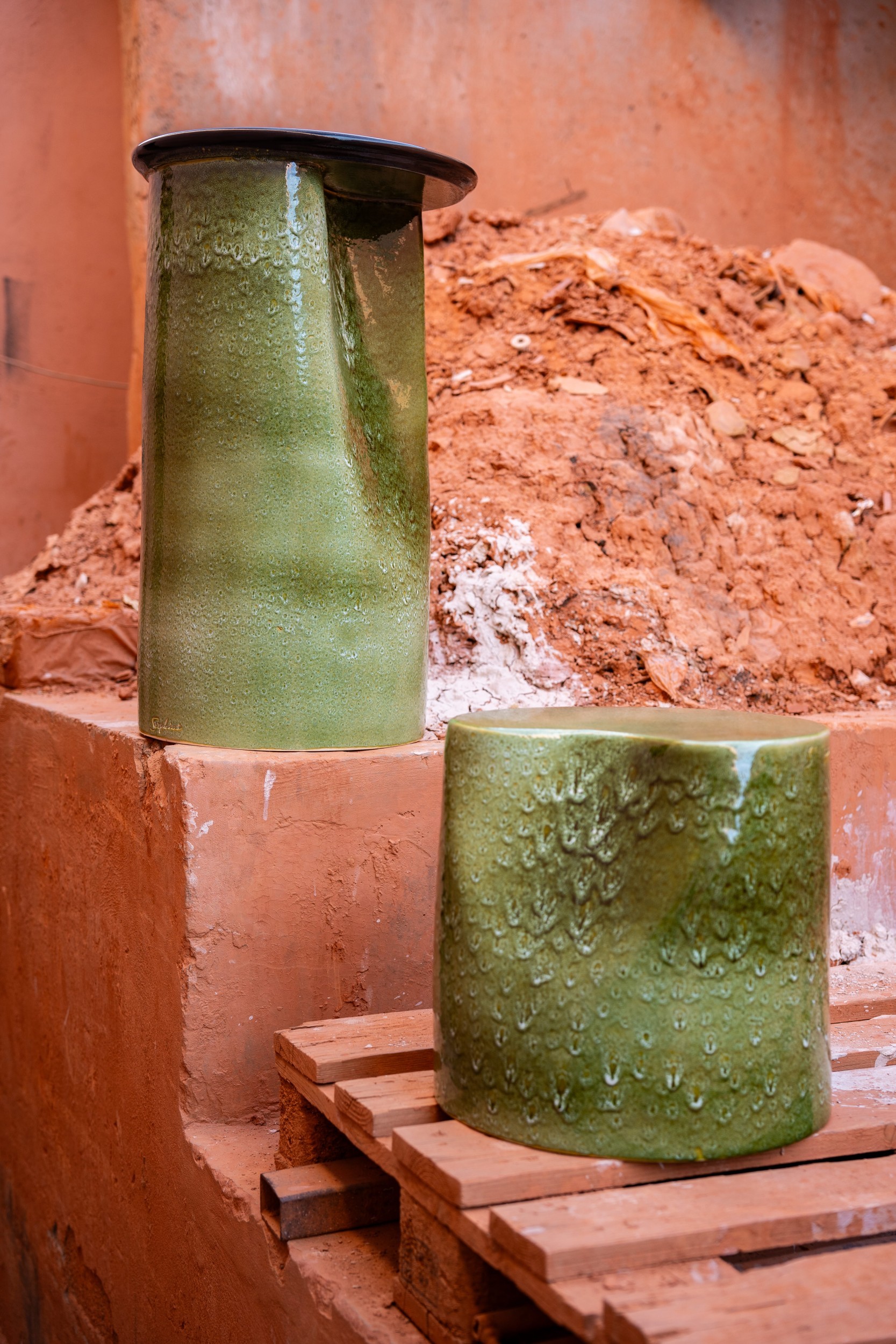
Once turned, the wood becomes a support for orange-scented oil, another fruit emblematic of the country. Fabric, too, plays an essential role in the hammam ritual. Jelda d’lhammam offers an alternative to the traditional thin waterproof mats on which people sit or lie. It takes the form of a long cushion padded with wadding. Waterproof and delicately embroidered, it can be rolled up and easily carried. Rezma, meanwhile, is a collection adorned with red thread inspired by the belts of Moroccan caftans. It pays tribute to the fabric-folding technique of the same name, traditionally used to carry ham- mam essentials, such as the Tahalib collection of woven and embroidered linen bath textiles. Finally, ceramics take centre stage with Tifinagh, a green-glazed Moroccan lounge set, and M’hakka, a reinterpretation of the traditional exfoliating stone. Its engra- ved patterns, inspired by zellige tiles, provide gentle exfoliation. •
Photos: Design in Residence Paris-Marrakech 2024 • © Maxime Cardino