Inspiration through material
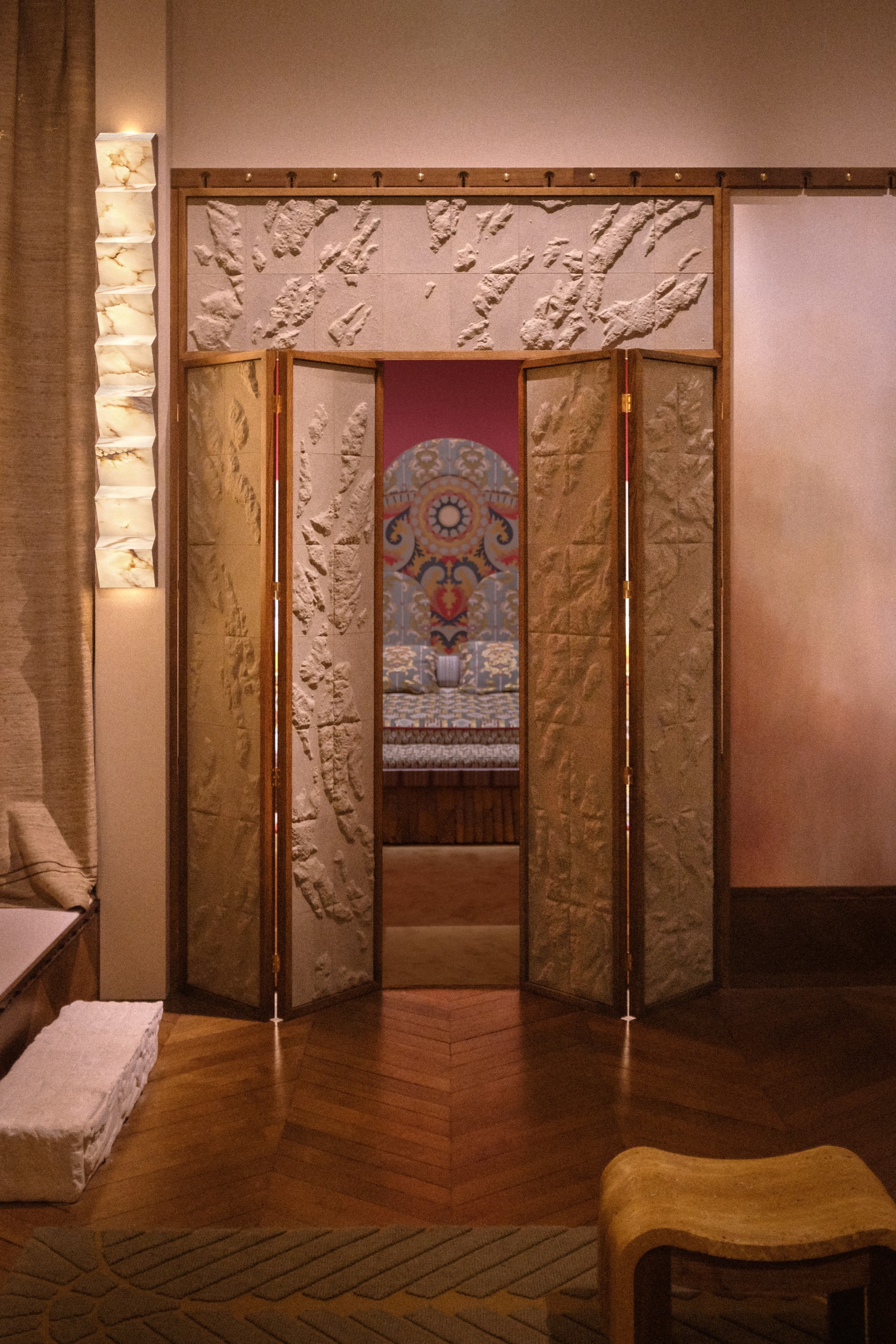
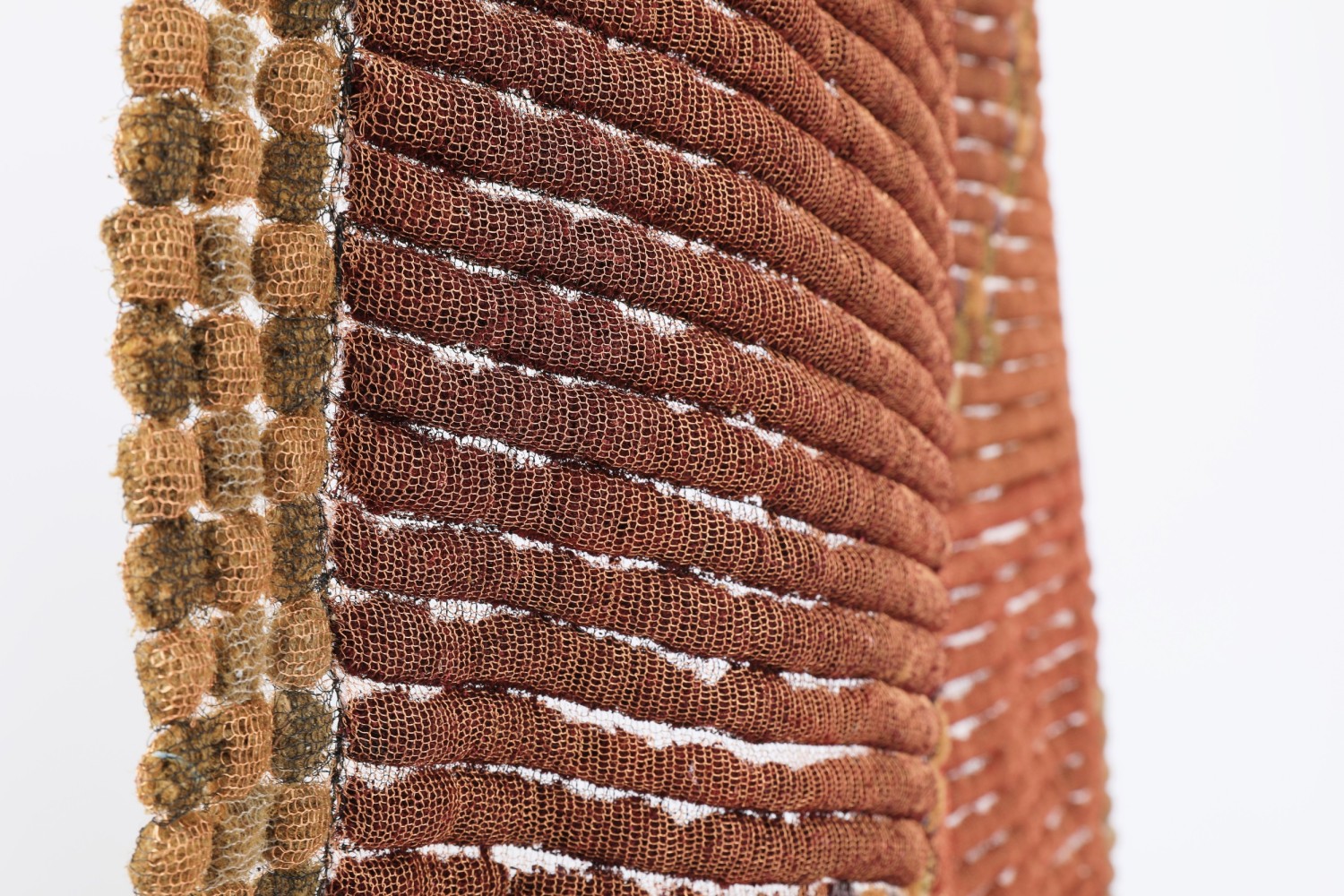
OUD architecture screen, in collaboration with Bertrand Fompeyrine, Les Nouveaux Emsembliers, Mobilier National, 2025 © BCDF Studio
The sea is a reservoir of materials. Sand, shells, animal fibres. Resources long considered residual that reveal new potential under the gaze of creators. From object design to textiles, from research to craftsmanship, this first part focuses on sand and marine fauna. In the next issue, we will explore algae and their links with textiles.
SAND: BETWEEN POETRY AND GEOGRAPHY
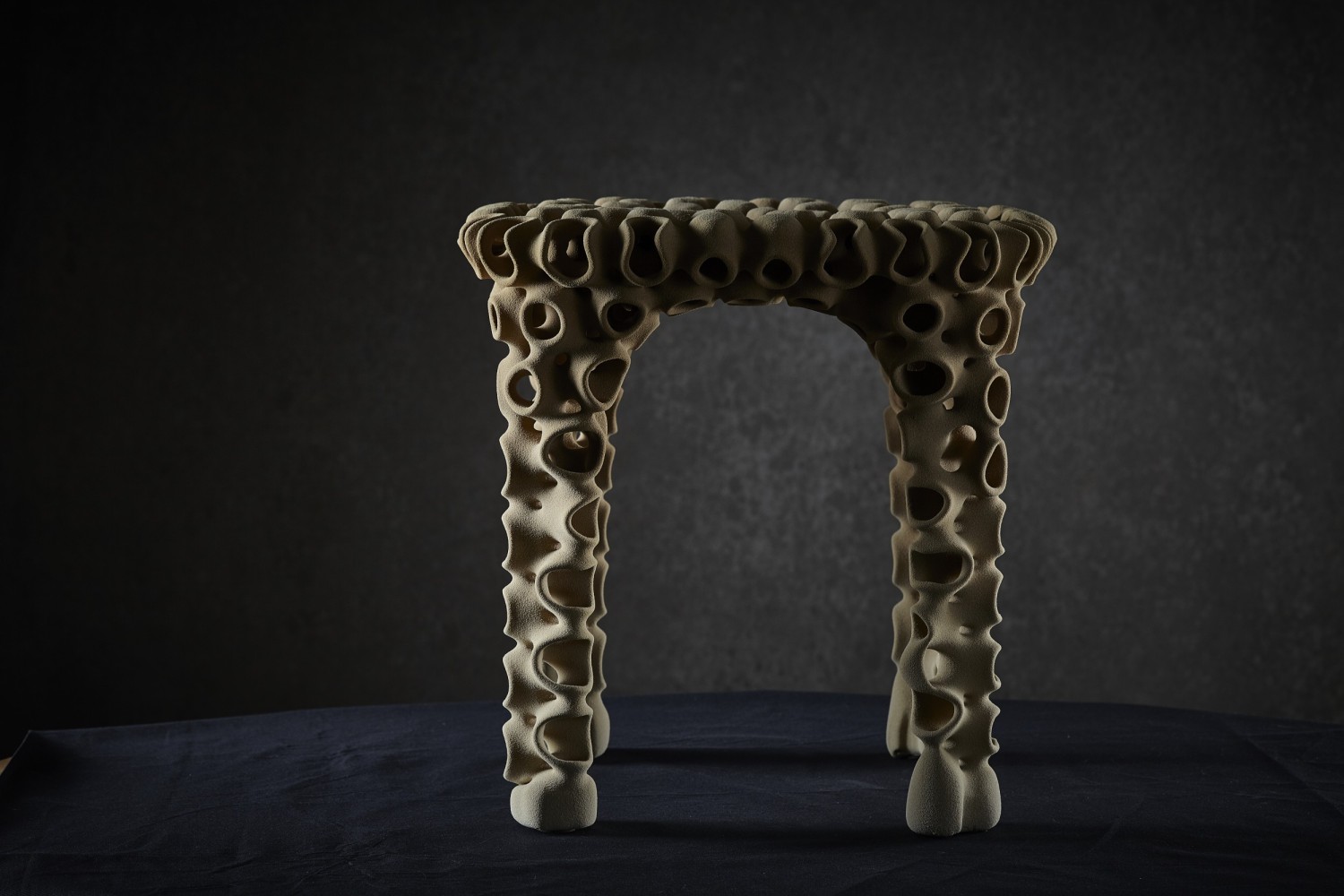
Used for thousands of years, sand remains an innovative material. Designer Peter Donders offers a new interpretation of it, combining craftsmanship and digital technology. Using a 3D modelling algorithm — an essential tool in his creative process —, he imagines design objects whose material is optimised without compromising structural strength. The new version of the Spherene table is a perfect example. The piece is 3D printed directly in sand, without moulds or waste. Sustainable and efficient, it is nonetheless aesthetic, with its organic shapes inspired by Belgian Art nouveau. A table that is both traditional and futuristic, sparking the imagination.
For Bertrand Fompeyrine, sand also awakens the imagination. Desert, shore, dune: this material has an inspiring poetic aura. During his travels, the artist and photographer collects handfuls of sand as evidence of his discoveries, which he incorporates into his artistic approach. Sand is a major material in the construction industry and a precious resource that he seeks to highlight through his sculptural works. This is the case in the exhibition ‘Les Nouveaux Ensembliers’ at the Mobilier national. In collaboration with the OUD studio, he has created screen panels composed of sand collected during his travels. Layered on top of each other, the sand becomes the final covering for a recycled support. The surface then reveals grains, irregularities and reliefs, like a map of dunes and eroded stones from Egyptian temples, imagined by the artist. A poetic approach to showcasing this natural material.
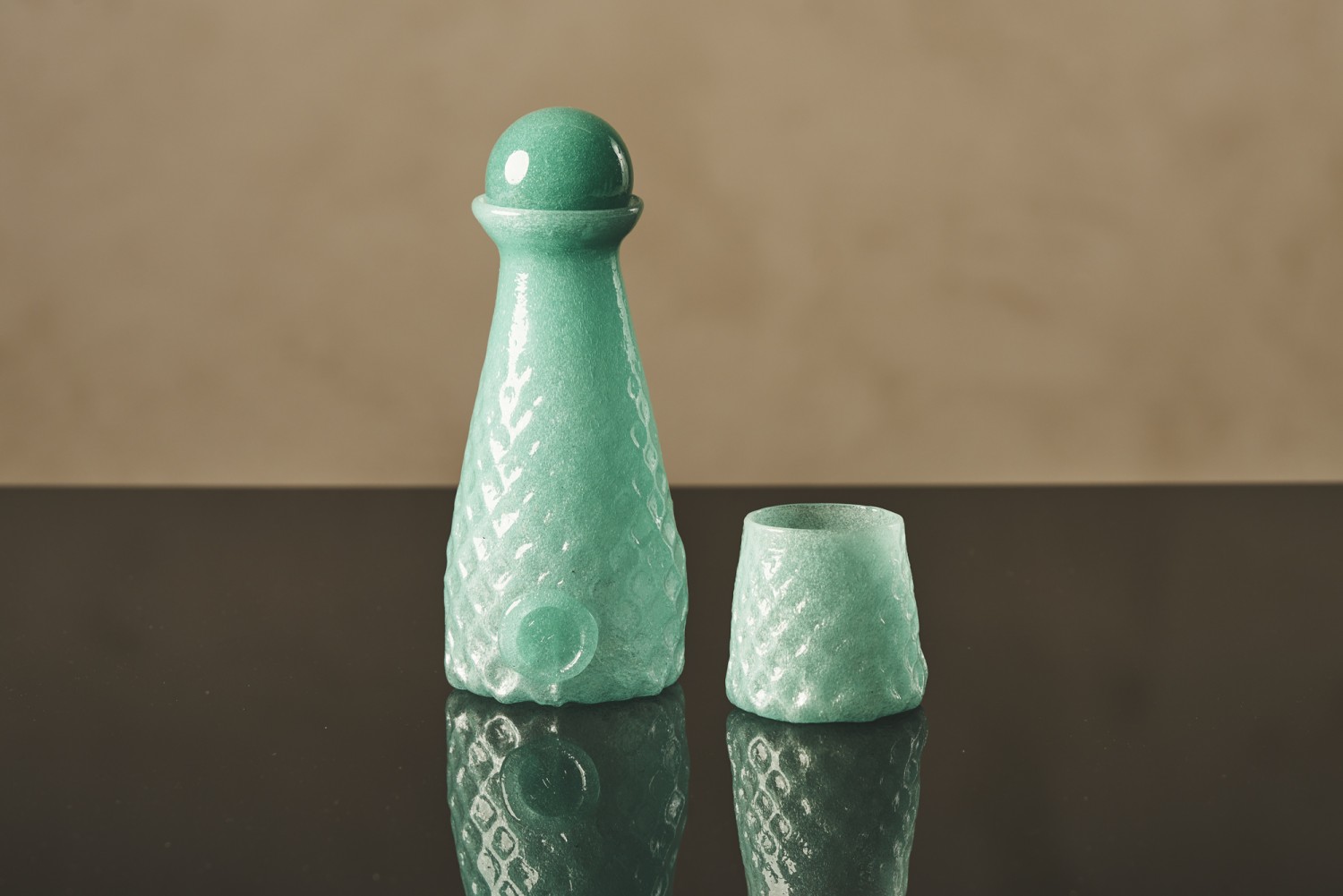
This territorial dimension also feeds into the research of designer Lulu Harrison. Fascinated by primitive craftsmanship and the creation of objects from local resources, she drew inspiration from ‘geo-specific’ manufacturing to promote the use of waste materials that are abundant, particularly in the marine world. Her Thames Glass project, winner of the Ralph Saltzman Prize, is her latest research. On the banks of the Thames in Oxford, she collects all kinds of waste, from mussel shells to sand. Once cleaned and crushed, the components are melted down before being blown by artisans. A specific recipe developed by the researcher results in delicate glassware in a blue-green colour reminiscent of the river. The project revives an almost forgotten practice while integrating waste into a circular glass economy.
MARINE FAUNA: NOTHING IS LOST, EVERYTHING IS TRANSFORMED
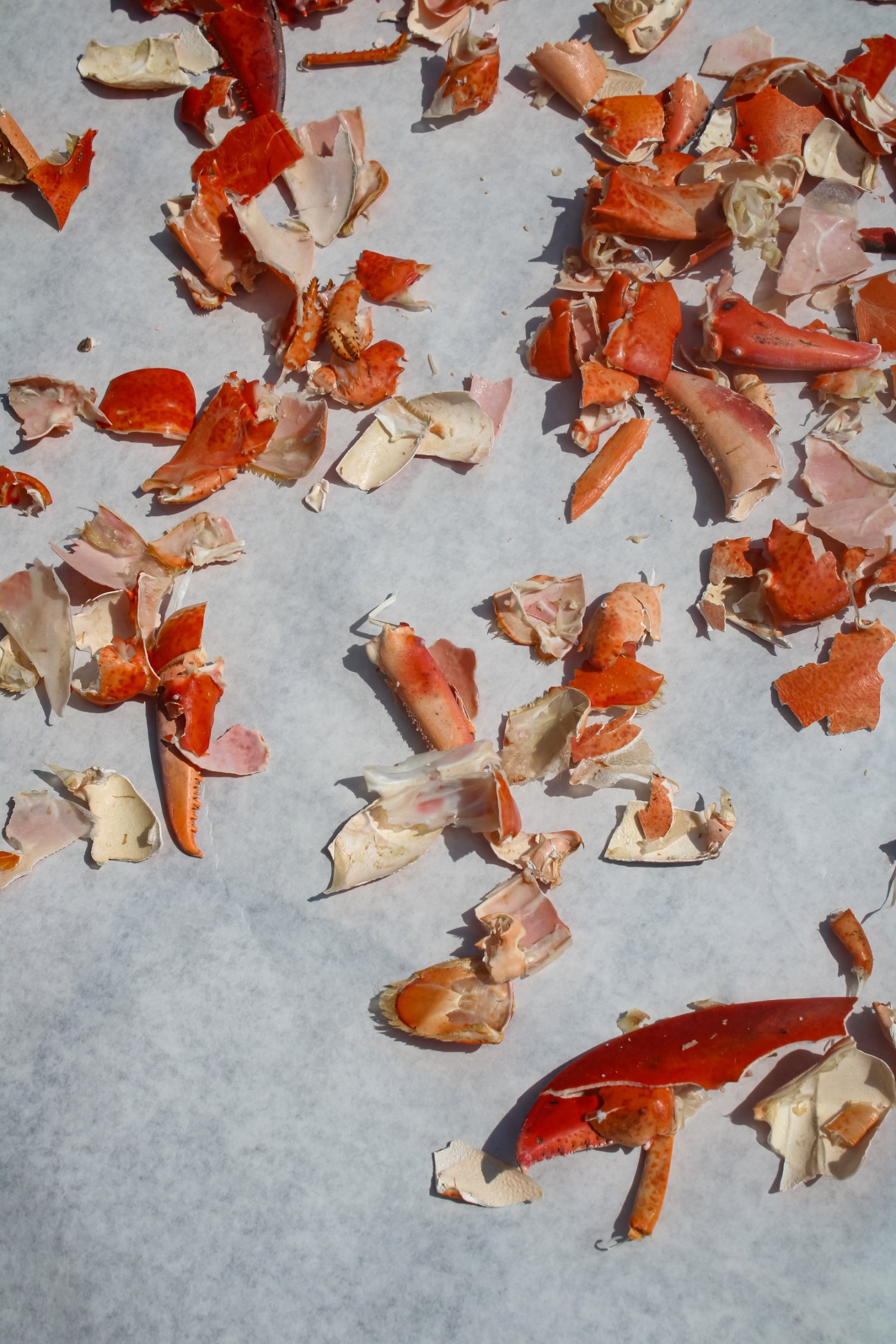
Sand is not the only marine resource: animals are too. And especially the waste produced by the fishing industry. As in Maine, where lobster fishing is an ancestral activity. During a residency in the region in 2024, the design studios MANUFACTURA and bioMATTERS discovered the history of this industry, lobsters and the potential of their shells, which are removed and discarded during processing. Like mushrooms, they are composed of chitin, a carbohydrate with sustainable, biodegradable and antibacterial properties. Keen to find a sustainable way to reuse local materials, the two studios decided to experiment. They crushed and mixed this marine waste with organic binders and local clays, then used 3D printing to create bricks. Currently in the research phase, this approach highlights the untapped potential of shellfish and promises a virtuous alternative for the construction industry.
Taking the same approach, designers Rebecca Fezard and Élodie Michaud from Hors Studio turned their attention to byssus, a little-known fibre secreted by mussels that has become an abundant by-product of mussel farming. However, this material has been used since the 16th century, particularly in weaving, earning it the name ‘sea silk’. For nearly four years, Hors Studio has been exploring the potential of this powerful fibre, which can stick together underwater and resist currents. Washed and carded, it is then bleached using traditional methods before being dyed naturally and woven. The fibre then shows its versatility. Without any petrochemical products, it adapts to many textile techniques — from weaving to knitting, felting and spinning. The studio has conducted numerous research projects to promote this marine resource in the fields of design and art.
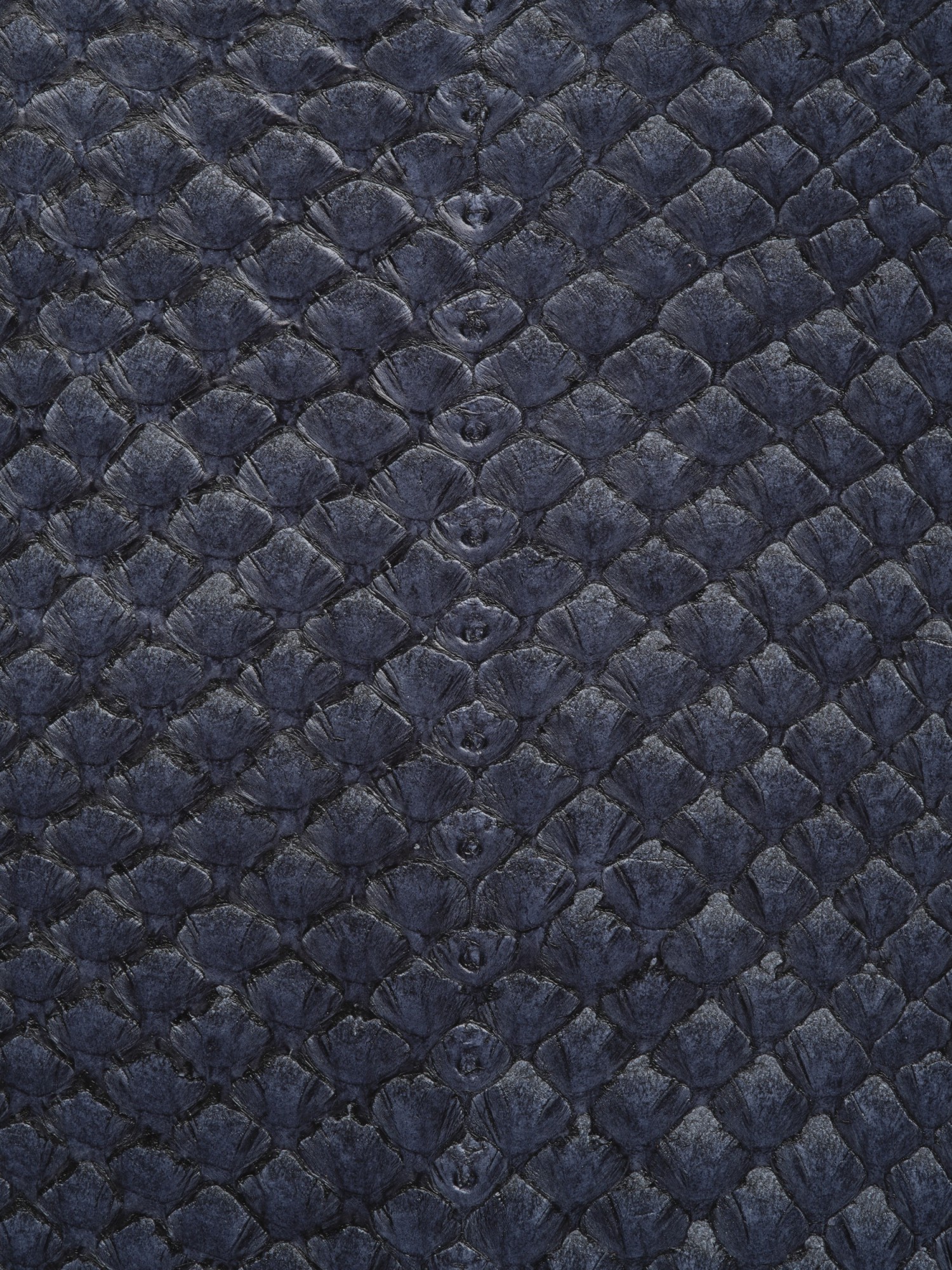
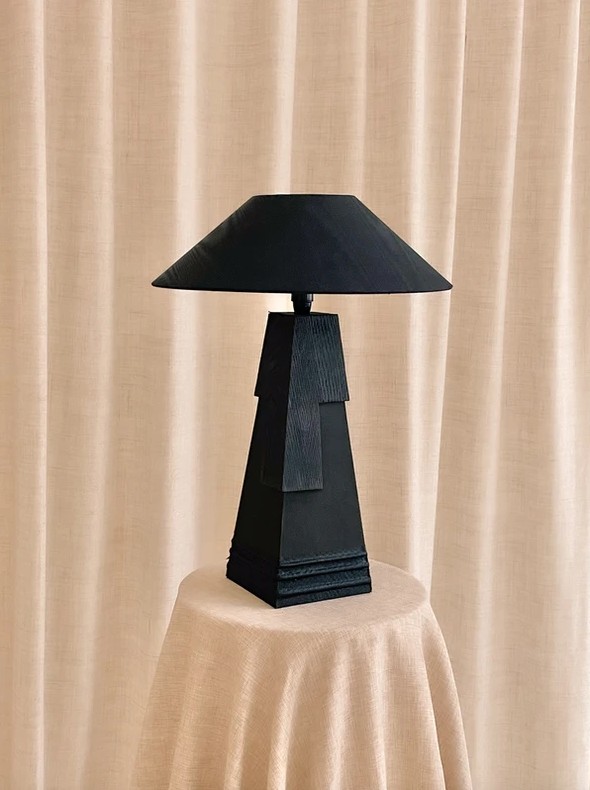
Finally, it is difficult to ignore fish leather. Used for centuries in the Middle East, it gradually fell into disuse before returning to the forefront with the issue of food waste. Like mammalian leather, fish skin has collagen fibres that allow it to be tanned, yet it is not valued. In France, near Lyon, Ictyos has been a pioneer, founding the country’s first marine tannery in 2018. Using skins recovered from the local agri-food industry, the manufacturer transforms this material with vegetable tannins, stabilising it, making it rot-proof and, above all, ennobling it. Whether it comes from salmon, sturgeon or trout, the leather has a unique texture which, despite its small size, inspires designers and luxury brands. Examples include artist Baptiste Cotten and his bench, crafted like a quilted marquetry piece in shades of grey, and Piaget’s collaboration with artist Rose Saneuil on an azure marquetry dial. A material that has long been overlooked, it is now revealing its exceptional qualities. •
Under the curation of Kamel Brik
Photos : Manufactura & biomatters, residency at Haystack Mountain School of Crafts, 2024 © Dinorah Schulte • Spherene sand light, Peters Donders © Dirk Viane • Thames Glass, Lulu Harrison, Carafe for Here Design © Lulu Harrison • Detail of Squama brilliant, Atlantic blue, salmon leather © ICTYOS • Vaca Atelier light fixture, made from Ictyos fish leather © ICTYOS